10 Activities for One Year Olds

10 Activities for One Year Olds

The first year of a child’s life is full of rapid growth, curiosity, and discovery. At one year old, babies are beginning to explore the world around them with their senses, movements, and early communication skills. Providing engaging and age-appropriate activities is essential to support their cognitive, physical, and emotional development. Simple, safe, and interactive activities can help strengthen their motor skills, improve coordination, and encourage creativity.
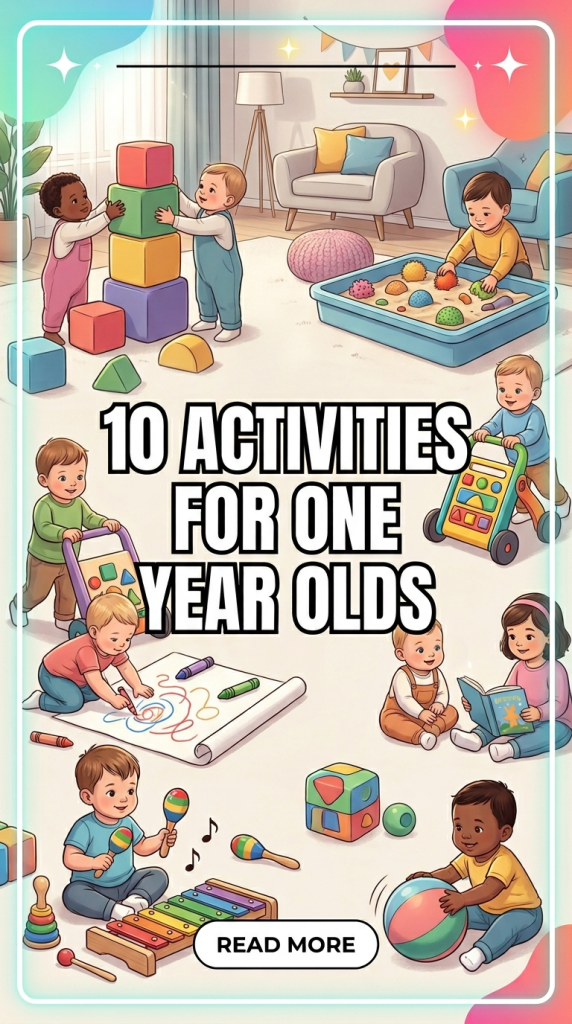
In this article, we will explore 10 fun and meaningful activities for one-year-olds that are easy to set up at home and highly beneficial for their development.


1. Sensory Play with Textures

Sensory play is one of the best ways to stimulate a one-year-old’s brain. You can create a sensory bin using soft fabrics, sponges, safe household items, or textured toys. Let your child touch, squeeze, and explore different materials.

This activity helps develop fine motor skills and enhances sensory awareness. Always supervise closely to ensure safety.


2. Stacking and Building Blocks

Provide your child with large, soft blocks or stacking cups. Encourage them to stack, knock down, and rebuild towers.

This activity improves hand-eye coordination and teaches basic problem-solving skills. It also introduces early concepts like balance and size.


3. Musical Fun Time

Introduce your child to music using simple instruments like rattles, drums, or even household items like pots and spoons. Play songs and encourage clapping or dancing.

Music helps in language development, rhythm recognition, and emotional expression. It’s also a great bonding activity.


4. Reading Picture Books

Choose colorful board books with large images and minimal text. Sit with your child and point to pictures while naming objects.

Reading enhances vocabulary, listening skills, and imagination. Even if they don’t understand everything, they benefit from hearing your voice and tone.


5. Water Play Activity

Fill a shallow tub with water and provide cups, spoons, and floating toys. Let your child splash and pour water.

Water play improves motor skills and introduces basic concepts like cause and effect. Make sure the water level is safe and supervision is constant.


6. Peek-a-Boo and Hide Games

Simple games like peek-a-boo are incredibly exciting for one-year-olds. You can also hide toys under a cloth and encourage them to find it.

These games help develop object permanence and memory skills while also creating moments of joy and laughter.


7. Push and Pull Toys

Provide toys that your child can push or pull, such as walkers or small carts. These encourage movement and exploration.

This activity strengthens leg muscles and supports early walking skills, boosting confidence and independence.


8. Finger Painting

Use non-toxic, baby-safe paints and let your child explore colors using their fingers. Spread paper on the floor and allow free creativity.

Finger painting enhances creativity, sensory exploration, and fine motor development. It can get messy, but it’s worth it!


9. Ball Rolling and Catching

Sit on the floor and roll a soft ball back and forth with your child. Encourage them to push or throw the ball.

This simple activity improves coordination, motor skills, and social interaction. It also teaches turn-taking in a fun way.


10. Simple Puzzle Play

Introduce large, chunky puzzles with simple shapes. Help your child place pieces into the correct spots.

Puzzles enhance problem-solving skills, shape recognition, and concentration. Start with very basic designs to avoid frustration.


Conclusion

Engaging your one-year-old in fun and interactive activities is essential for their overall development. At this stage, children learn best through play, exploration, and interaction with their caregivers. The activities mentioned above are simple yet powerful ways to support their growth while strengthening your bond with them.

Remember, every child develops at their own pace, so be patient and encouraging. The goal is not perfection but creating a safe, loving, and stimulating environment where your child can thrive and enjoy learning new things every day.

Comments

No comments yet. Why don’t you start the discussion?

Leave a Reply

Your email address will not be published. Required fields are marked *