The transition between your patio and the surrounding landscape is where the true character of your outdoor living space is defined. A well-designed border doesn’t just contain the patio; it frames it, adding color, texture, and a sense of architectural structure that bridges the gap between your home and your garden. Whether you are aiming for a crisp, minimalist edge or a lush, botanical frame, the right border design is what takes a patio from a simple concrete slab to a professional-grade outdoor room.
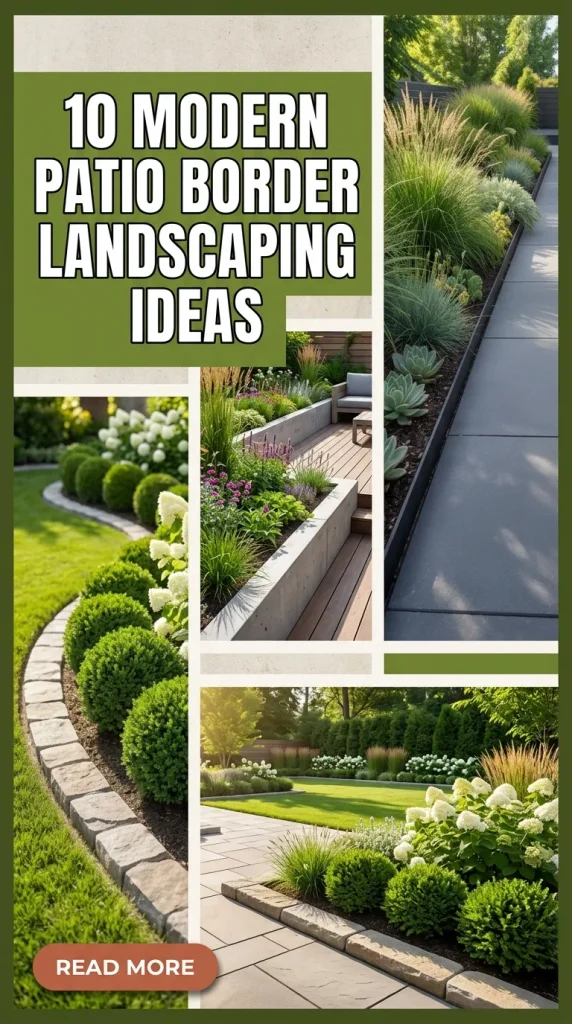
Here are 10 modern patio border ideas that will help you create a finished, high-end look.
1. The Steel-Edged Gravel Trench
For the ultimate in clean-lined, modern design, a steel-edged gravel trench is unmatched. By installing thin, 1/4-inch powder-coated steel edging, you create a permanent, sharp boundary that prevents mulch or soil from spilling onto your patio. A 6-to-10-inch trench filled with decorative white or grey river stones between the patio and the garden beds acts as a drainage channel and a visual “reset” button. It looks incredibly professional and keeps the hardscaping looking pristine year-round.
How to Make
Use commercial-grade, flexible steel edging to create a perfect curve or a laser-straight line. Bury the steel so only about an inch remains above the patio surface. Dig out a narrow trench along the inside edge and fill it with high-quality, uniform-sized river rock or polished pebbles. This creates a “no-man’s land” that is extremely low maintenance and provides a sharp, high-contrast visual break that highlights the architecture of the patio itself.

2. The Tiered Boxwood Hedge
If you want to add a sense of formal elegance, a low-growing boxwood hedge is a classic choice that works beautifully with modern, clean-lined patios. Boxwoods offer a deep, consistent green color and a dense texture that provides a structured, “finished” appearance. By keeping the hedge clipped to a uniform, low height—around 12 to 18 inches—you add privacy without blocking views, creating a lush, manicured border that feels like a private sanctuary.
How to Make
Choose a slow-growing boxwood variety that doesn’t require constant pruning. Plant them in a single, perfectly straight or curved line along the patio edge. Use a string line for planting to ensure the hedge stays perfectly aligned. Once they have filled in, use electric hedge trimmers once or twice a season to maintain a sharp, geometric profile. This creates a “green wall” that looks like a professional garden designer installed it.
3. The Structural Grass Border
Ornamental grasses are the quintessential plant for modern landscaping. They add height, movement, and a sense of architectural drama. Planting structural grasses—like Karl Foerster feather reed grass or Blue Fescue—along the patio edge creates a swaying, soft barrier that feels light and airy. Because they are perennial, they provide year-round texture, with their dried plumes adding a touch of rustic charm even in the winter months.
How to Make
Select grasses that are appropriate for your local climate and sun exposure. Group them in large, repeating swaths along the border rather than mixing many different types. This consistency creates a more “designed” look. Place them about 2 to 3 feet back from the patio edge to allow them to flow over slightly without obstructing the walking path. The result is a vibrant, moving border that softens the hard edges of your patio.

4. The Raised Corten Steel Planter Bed
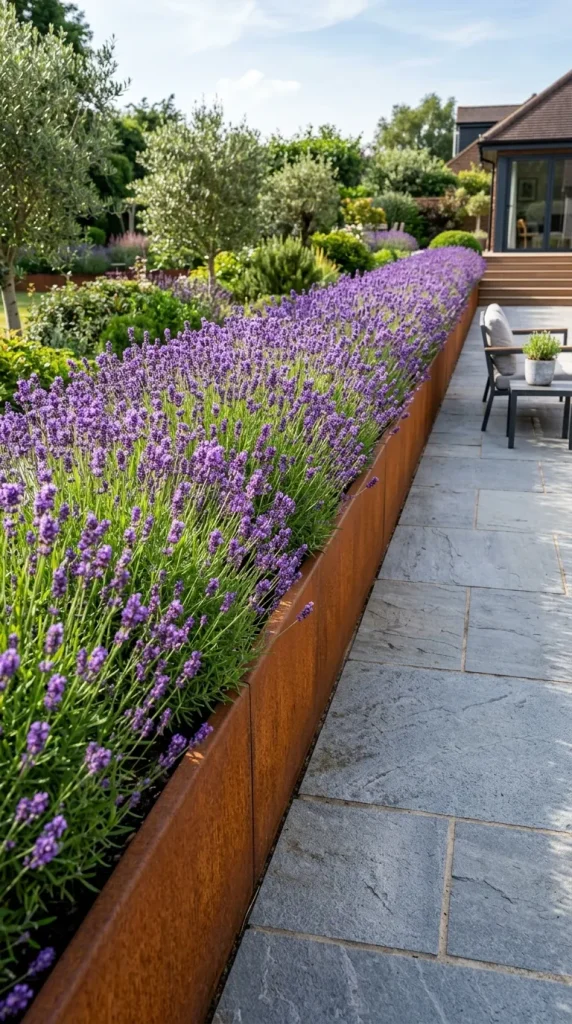
Corten steel is a modern favorite for a reason; its warm, rusted-orange patina provides a stunning, high-contrast backdrop to deep green plants. Installing long, linear Corten steel planter boxes along the border of your patio serves two functions: it creates a raised garden bed and acts as a stylish, architectural barrier. This design is perfect for those who want to add height and depth to their border without the need for extensive digging or soil preparation.
How to Make
Purchase modular Corten steel planters in a length that matches your patio edge. Arrange them end-to-end to create a continuous line. Fill them with a high-quality soil mix and plant them with a single type of plant, such as sedum or lavender, to create a focused, high-end display. The raised height of the planters also makes them an excellent spot for integrated, hidden LED strip lighting, adding an extra layer of luxury to your patio in the evening.

5. The “Spiller” Herb Garden
For a functional and fragrant border, consider planting an herb garden along the edge of your patio. Use low-growing, trailing herbs like creeping thyme, rosemary, or oregano. As they grow, they will naturally “spill” over the edge of the patio, softening the hard stone or concrete and filling the air with a beautiful scent every time you step outside. It’s an easy, cute, and highly practical way to integrate your kitchen garden into your outdoor living space.
How to Make
Ensure your patio border has at least 6 to 8 hours of sun, which most herbs crave. Dig a shallow trench at the edge of the patio and mix in some compost and drainage-friendly soil. Space your herbs about 12 inches apart. As they start to grow, gently guide them toward the edge so they spill over naturally. This creates a lush, inviting, and fragrant border that is as useful as it is beautiful.

6. The Linear LED-Lit Channel
Modern borders can be integrated with lighting to create a “glowing” effect at night. By building a narrow channel along the patio edge and installing outdoor-rated LED tape lights, you can illuminate the border from the ground up. This is a subtle, high-tech way to add safety and drama to your outdoor space. It defines the edge of the patio even in the pitch black, giving your garden a sophisticated, futuristic look that feels like a professional design project.
How to Make
Build a custom channel using metal or stone edging that allows for a recessed installation. Install low-voltage, waterproof LED strips protected by a diffusion lens (which softens the light). Connect the lights to a transformer hidden in a nearby garden bed. The light should wash over the edge of the patio, creating a soft, warm, and inviting glow that makes the space feel like a high-end, professionally designed outdoor lounge.

7. The Natural Stone Dry-Stack Wall
If your patio is slightly elevated, a dry-stacked natural stone wall is a timeless and romantic border choice. Unlike mortared walls, dry-stacking (using stone without mortar) has a rustic, authentic, and high-end feel. It adds depth, texture, and a sense of “history” to a modern patio. This border is incredibly durable and integrates seamlessly into both modern and classic landscapes. It provides a permanent, sculptural edge that is both beautiful and functional.
How to Make
Source locally available, flat stones like slate or limestone. Start by laying a base of large, flat stones into a slightly excavated trench to create a stable footing. Carefully stack the stones, alternating the seams for stability. You don’t need to be perfect; the slight variations in the stone add to the “story” and character of the wall. Fill the gaps with small, decorative gravel for a professional, finished appearance.

8. The Lavender and Stone Path
For a classic, Mediterranean-inspired look, use a border of aromatic lavender paired with a path of light-colored gravel. The silver-green foliage of the lavender looks beautiful against the warm, grey or tan of crushed stone, and the scent is absolutely divine. This border style is refined, sophisticated, and incredibly calming. It creates a soft, hazy transition between your patio and the rest of the garden, perfect for a romantic, high-end, and peaceful outdoor sitting area.
How to Make
Select a compact lavender variety, such as ‘Munstead’ or ‘Hidcote,’ which are known for their dense growth. Plant them in a rhythmic line along the edge. Fill the space between the patio and the lavender with 1/4-inch crushed stone. The key here is the maintenance: shear the lavender back once a year to keep it from getting too woody and tall. This results in a classic, professional, and elegant border that is consistently beautiful.

9. The Floating Timber Bench Border
For a border that is as functional as it is beautiful, install a low-profile, floating timber bench along the edge of your patio. By using pressure-treated or rot-resistant wood like cedar, you can create a seating edge that defines the space. It’s perfect for small patios where you need extra seating for guests but don’t want to crowd the area with chairs. The horizontal lines of the wood provide a clean, modern aesthetic that feels warm, intentional, and high-end.
How to Make
Build a simple, sturdy frame using heavy timber. Mount the frame securely into the ground or onto a stone base at the edge of the patio. Top it with smooth, sanded wood planks and seal them with an outdoor-grade finish. Keep the height low—around 18 inches—to maintain an open, unobstructed view. This creates a definitive border that invites people to sit, linger, and enjoy the beauty of your garden.

10. The Geometric Succulent/Cactus Border
For a modern, desert-inspired home, a succulent or cactus border is a striking, low-maintenance choice. Succulents come in incredible sculptural shapes and muted colors, from dusty blue to deep sage. By grouping them in a clean, geometric arrangement along the patio edge, you create a desert-modern aesthetic that is incredibly chic. This border is ideal for those who want a “cool” and trendy look that requires very little water and is visually stimulating.
How to Make
Choose a variety of succulents or cold-hardy cacti, such as Agave or Sempervivum, depending on your climate. Use a clean, neutral stone mulch—like dark volcanic rock or light granite chips—to fill the area around them. The contrast between the rock and the fleshy, geometric leaves of the succulents provides a professional, high-end landscape look that is both modern and incredibly resilient.