10. Butterfly Braids
The Vibe: Creative, three-dimensional, fashion-forward, and absolutely jaw-dropping.
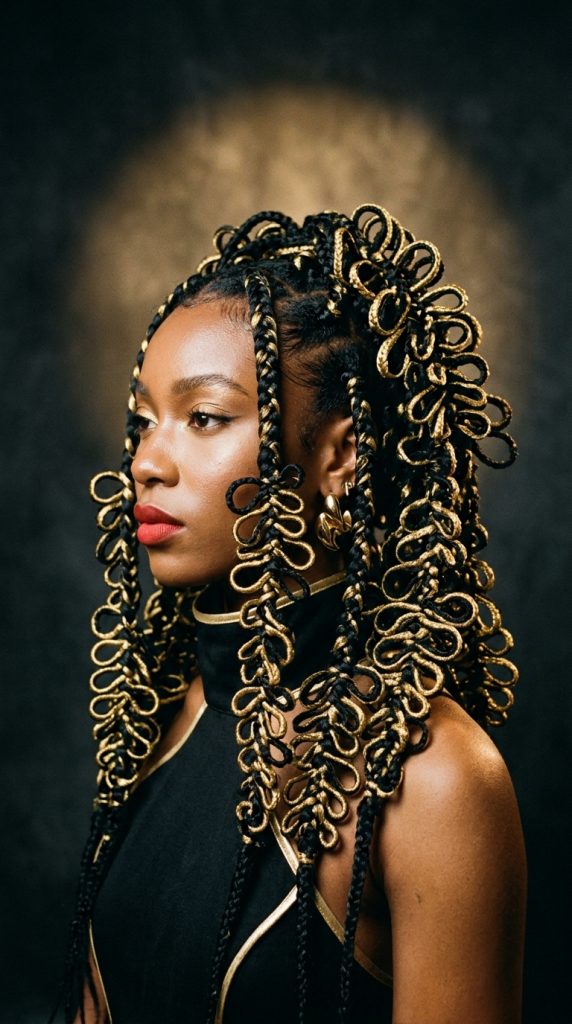
Butterfly braids are one of the most visually inventive braiding hairstyles to emerge in recent years. They are created by leaving intentional loops or puffs of hair extending outward from a standard braid or cornrow, creating a series of wing-like shapes along the length of the braid that genuinely resemble butterfly wings. The result is a style that looks like wearable sculpture — completely unlike any traditional braid.
What Makes Them Unique:
The looping technique is the signature element — instead of pulling every strand tight and flat, specific loops of braiding hair or natural hair are left extending outward, creating a three-dimensional, sculptural quality. The loops can be small and subtle or large and dramatic depending on the desired effect.
How to Create Them:
Begin with a standard box braid or cornrow installation. As you braid, intentionally leave small loops of braiding hair extending outward at regular intervals rather than pulling them tight. These loops should be uniform in size and spacing for the most aesthetically pleasing effect. Alternatively, install standard braids first and then create the butterfly effect by carefully loosening specific sections of each braid to form the loops.
Pro Tips:
- Practice the looping technique on a small section before committing to a full head of butterfly braids — consistency in loop size is what makes the style look intentional rather than messy
- Using two colors of braiding hair — one for the main braid and one for the loops — creates a stunning two-toned butterfly effect
- Butterfly braids photograph exceptionally well — the three-dimensional quality creates beautiful shadows and depth in photos
- Because the loops extend outward, butterfly braids add significant volume — this is a very full, statement-making style
Best Braiding Hair: Kanekalon pre-stretched braiding hair, rubber or silicone bands to hold loops during styling.
How Long It Lasts: 3–4 weeks (the loops can loosen more quickly than standard braids).
Occasion: Fashion events, editorial photoshoots, bold personal expression, statement occasions.
Choosing the Right Braiding Hair: A Complete Guide
Selecting the right braiding hair is as important as choosing the right style. The wrong hair can make installation difficult, cause scalp tension, or create a finish that looks artificial. Here’s what you need to know:
Types of Braiding Hair:
Kanekalon Braiding Hair — The most common and versatile synthetic braiding hair. Lightweight, heat-resistant (can be sealed with hot water), available in hundreds of colors, and works well for box braids, cornrows, feed-in styles, and lemonade braids. The go-to choice for most protective styles.
Pre-Stretched Braiding Hair — Kanekalon that has been pre-stretched to remove the natural springiness, making it easier to work with, reducing installation time, and creating a more natural-looking finish. Highly recommended for beginners.
Toyokalon / Silky Braiding Hair — A smoother, silkier synthetic fiber that creates a glossy, sheen-rich finish. Best for Senegalese twists and styles where a polished, silky appearance is desired.
Spring Twist / Water Wave Hair — Pre-curled synthetic hair used for passion twists, spring twists, and bohemian styles. Creates the fluffy, textured quality that defines these romantic styles.
Marley Hair — A coarser, more textured synthetic hair that mimics the look and feel of natural Afro-textured hair. Used for Marley twists, faux locs, and natural-looking styles.
Human Hair Braiding Extensions — More expensive but the most natural-looking option. Can be colored, heat-styled, and treated similarly to natural hair. Best for premium, long-lasting protective styles.
Key Shopping Considerations:
- Match the braiding hair weight to your desired style — lighter hair for defined braids, heavier hair for voluminous styles
- Consider color carefully — ombre, highlighted, and color-blocked braiding hair creates dynamic visual effects
- Buy more than you think you need — running out mid-installation is frustrating and can result in uneven styles
Scalp Care While Wearing Braiding Hair Styles
The biggest mistake people make with braiding hair styles is neglecting scalp care during the weeks they’re installed. Braiding hair creates a physical barrier between your scalp and the outside world — but that doesn’t mean your scalp stops producing oil, experiencing dryness, or needing moisture.
Essential Scalp Care for Braided Styles:
Moisturize Weekly — Use a lightweight scalp oil or oil spray directly on the scalp between braids at least once a week. Jojoba oil, tea tree oil mixed with a carrier oil, or a dedicated scalp serum all work beautifully.
Cleanse the Scalp — You can and should wash your scalp while wearing braiding hair styles. Use a diluted shampoo applied directly to the scalp with a spray bottle or applicator, massage gently, and rinse thoroughly. Follow with a light conditioner on the natural hair beneath the braids.
Protect Your Edges — The hairline is the most vulnerable area when wearing braiding hair styles. Never let braids pull tightly on your edges. Sleep with a silk or satin bonnet every night to protect the hairline and prevent friction.
Keep the Style Fresh — Every two to three weeks, refresh the edges with edge control, address any braids that have significantly loosened at the root, and moisturize the scalp. This extends the life of the style and keeps it looking its best.
Know When to Take Them Down — No braiding hair style should be worn past its recommended timeframe. Keeping braids in too long leads to matting of the natural hair beneath, difficulty detangling, and potential breakage. Follow the recommended wear times for each style.
Hairstyle Quick Reference Chart
| Style | Technique | Installation Time | Lasts | Skill Level | Best For |
|---|---|---|---|---|---|
| Box Braids | Three-strand with added hair | 4–8 hours | 6–8 weeks | Intermediate | All natural hair types |
| Knotless Box Braids | Feed-in three-strand | 6–10 hours | 6–8 weeks | Advanced | Sensitive scalps |
| Goddess Braids | Large cornrow with extensions | 2–4 hours | 4–6 weeks | Intermediate | All natural hair types |
| Fulani Braids | Mixed cornrow and individual | 4–6 hours | 4–6 weeks | Advanced | Cultural celebrations |
| Feed-In Cornrows | Underhand scalp braid | 2–4 hours | 4–6 weeks | Intermediate | Athletic lifestyles |
| Senegalese Twists | Two-strand rope twist | 4–8 hours | 6–8 weeks | Intermediate | All natural hair types |
| Passion Twists | Two-strand with curly hair | 4–6 hours | 4–6 weeks | Intermediate | Bohemian aesthetic |
| Lemonade Braids | Horizontal feed-in cornrows | 3–5 hours | 4–6 weeks | Advanced | Bold statements |
| Tribal Braids | Mixed techniques | 6–12 hours | 4–8 weeks | Expert | Cultural expression |
| Butterfly Braids | Looped box braid technique | 6–10 hours | 3–4 weeks | Advanced | Fashion statements |
Frequently Asked Questions About Braiding Hair Hairstyles
What is the best braiding hair for beginners? Pre-stretched kanekalon braiding hair is the best option for beginners. It’s easier to work with than regular kanekalon because it’s already been stretched to remove the natural springiness. It’s lightweight, comes in many colors, and creates a natural-looking finish on box braids, cornrows, and most basic protective styles.
How long do braiding hair hairstyles last? Most braiding hair styles last between four and eight weeks, depending on the technique, the quality of the installation, and how well you maintain the scalp and edges during wear. Box braids and Senegalese twists typically last the longest — up to eight weeks. Butterfly braids and passion twists usually last three to six weeks.
Are braiding hair styles damaging to natural hair? When installed correctly and maintained properly, braiding hair styles are actually protective — they reduce daily manipulation, protect the ends, and allow natural hair to grow undisturbed. Damage occurs when braids are installed too tightly (causing traction alopecia), left in too long (causing matting), or removed carelessly (causing mechanical breakage).
How do I remove braiding hair without damaging my natural hair? Use sharp hair cutting scissors to cut each braid at the point where the braiding hair was attached — usually two to three inches from the root. Never pull braids out from the root. Once the braiding hair is removed, saturate the natural hair with a generous amount of conditioner or detangling spray before attempting to detangle, working from the ends upward.
Can you wash your hair while wearing braiding hair styles? Yes — and you should. Dilute a sulfate-free shampoo with water in a spray bottle and apply directly to the scalp between braids. Massage gently with your fingertips. Rinse thoroughly and allow to air dry completely before sleeping. You can also use dry shampoo at the scalp between washes for a quick refresh.
What braiding hair style is best for hair growth? Knotless box braids, Senegalese twists, and feed-in cornrows are all excellent styles for encouraging length retention. They install with low to moderate tension, protect the natural hair underneath, and can be maintained for weeks at a time — allowing hair to grow undisturbed. Pair any protective style with regular scalp moisturizing and a consistent nighttime bonnet routine for the best results.
Final Thoughts
Braiding hair hairstyles represent one of the most beautiful, diverse, and historically significant categories in the entire world of hair styling. From the clean architectural lines of lemonade braids to the regal fullness of goddess braids, from the cultural depth of Fulani braids to the sculptural innovation of butterfly braids — every style in this guide tells a story, creates beauty, and offers something genuinely unique.
The 10 braiding hair hairstyles ideas covered in this guide are just the beginning. The world of braiding is vast, ever-evolving, and endlessly creative. Whether you’re exploring protective styles for the first time, returning to braids after a long break, or looking for your next signature look, there has never been a better time to embrace the art of braiding.
Find a skilled braider who understands and respects the cultural and technical dimensions of these styles, invest in quality braiding hair, take care of your scalp during wear, and enjoy one of the most beautiful styling traditions the world has ever produced.
Save this guide, share it with your community, and pin your favorite styles for your next appointment.