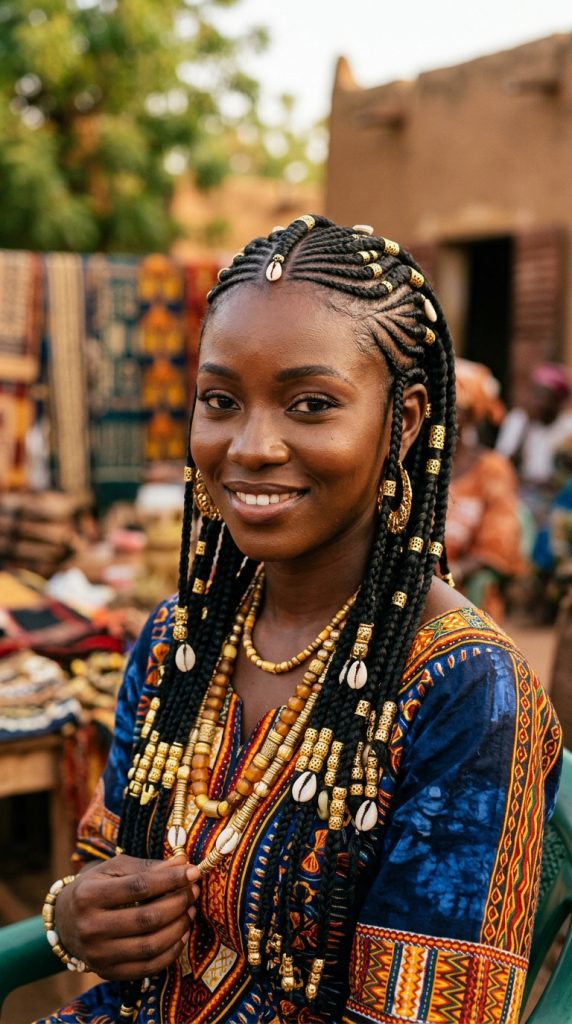
4. Fulani Braids
The Vibe: Cultural, intricate, adorned, and breathtakingly beautiful.
Fulani braids — originating from the Fula people of West Africa — are one of the most intricate and recognizable braiding traditions in existence. Characterized by a center braid running from the forehead to the back of the head, thin braids running along the sides of the face, and coiled or looped braids at the temples, Fulani braids are traditionally adorned with beads, cowrie shells, and rings.
What Makes Them Unique:
The combination of cornrowed sections, individual braids, and distinctive accessories creates a look that is architectural, deeply cultural, and visually extraordinary. Every element is intentional — the placement of beads, the direction of each braid, the framing of the face.
How to Create Them:
The center braid — the defining element — is created first, running from the center front hairline to the center nape. Additional cornrow sections are then created on each side, running in curved or diagonal patterns. Individual braids or twists are added at the crown and temples, often with curly hair allowed to hang loose at the ends. Beads and accessories are threaded onto individual braids throughout.
Pro Tips:
- Authentic Fulani braids incorporate specific accessory elements — brass rings, gold-toned beads, and cowrie shells are all traditional and look stunning
- The face-framing side braids are one of the most flattering elements — ensure they run close to the hairline for maximum impact
- Mixing braid sizes — some thin, some thick — creates a more dynamic, visually complex finished look
- This style photographs exceptionally well — the combination of patterns, accessories, and scale creates incredible visual depth
Best Braiding Hair: Thin kanekalon for cornrows, pre-stretched hair for individual braids.
How Long It Lasts: 4–6 weeks.
Occasion: Cultural celebrations, formal events, editorial photoshoots, meaningful occasions.