Fine hair has a reputation it doesn’t deserve. For too long, people with fine hair have been told what they can’t do — can’t go too long, can’t have too many layers, can’t pull off bold cuts. And nowhere has that myth been more aggressively disproven than in the world of shag hairstyles. The shag haircut — with its signature layers, choppy ends, and deliberately undone texture — is arguably the single best haircut category that exists specifically for fine hair. It takes everything that fine hair lacks and builds it in structurally, through the cut itself.
This guide covers 10 shag hairstyles for fine hair ideas that range from the classic 1970s-inspired shag to modern, fashion-forward interpretations that are dominating Pinterest boards and salon request lists right now. Every style includes a detailed breakdown of why it works for fine hair, how to ask your stylist for it, how to style it at home, and the essential products that make fine hair shags look their absolute best.
At the end of the guide, you’ll find 10 detailed Pinterest image prompts for content creators and photographers. Let’s get into it.
Why the Shag Haircut Is the Best Thing That Ever Happened to Fine Hair
To understand why shag hairstyles are so transformative for fine hair, you need to understand what a shag actually does structurally. A shag haircut is defined by several key technical elements — and every single one of them works in favor of fine hair.
The defining elements of a shag haircut:
- Layers throughout — from the crown down to the ends, creating movement and removing bulk at the bottom that would otherwise weigh fine hair down
- Choppy, textured ends — point-cut or razor-cut ends that create a deliberately undone, piece-y finish rather than a blunt, heavy line
- Crown layers — short layers at the top of the head that lift away from the scalp and create the illusion of volume and thickness at the root
- Face-framing layers — sections that curve or angle toward the face, creating dimension right where the eye goes first
- Curtain bangs or fringe — a common addition to the shag that adds another layer of visual texture at the front
Why every one of these elements is specifically good for fine hair:
Fine hair lacks density — there simply isn’t as much hair per square inch of scalp as in medium or thick hair. This means fine hair tends to lie flat, look limp, and lose any style it’s given by midday. Layers counteract this by removing the weight that drags fine hair down and creating movement that makes each individual strand appear more lively. Choppy ends create visual texture where fine hair would otherwise look flat and blunt. Crown layers literally lift the hair away from the scalp at the root level.
In short: a well-executed shag haircut does for fine hair what two hours of blow-drying and volumizing products attempt to do — but the shag does it permanently, through structure.
1. The Classic 70s Shag
The Vibe: Rock and roll, vintage, effortlessly cool, and timelessly iconic.
The original shag haircut was born in the early 1970s and defined the hair aesthetic of an entire decade. It was the haircut of rock stars and free spirits — heavily layered, slightly wild, full of movement. For fine hair, the classic 70s shag is particularly transformative because its hallmark is maximum layering with minimal bulk — exactly what fine hair needs.
What Makes It Work for Fine Hair:
The 70s shag uses aggressive layering from the crown downward, with the shortest layers sitting right at the top of the head and progressively longer layers moving toward the ends. This graduated layer structure creates so much movement and separation that fine hair appears to have significantly more volume and density than it actually does. The choppy, undone ends prevent any heaviness at the bottom that would drag fine hair down.
How to Ask for It:
Tell your stylist you want a classic 70s-inspired shag with heavy layering throughout, short crown layers, and choppy point-cut ends. Ask them to use a razor or point-cutting technique on the ends rather than blunt scissors. Request curtain bangs if you want the complete 70s look — they frame the face and add another dimension of texture right at the front.
How to Style It:
Apply a volumizing mousse to damp hair from roots to ends. Flip your head upside down and blow-dry on medium heat while scrunching upward — this builds volume at the roots that fine hair desperately needs. Once about 80 percent dry, flip back up and use a diffuser to finish. Use a one-inch curling wand to add random, undone bends throughout. Finish with a dry texturizing spray at the roots.
Pro Tips:
- Never brush a styled 70s shag — run your fingers through it instead to preserve the texture and volume
- A root-lifting spray applied at the crown before blow-drying gives fine hair incredible lift that lasts all day
- Embrace the undone quality — the more perfectly styled this haircut looks, the less 70s and cool it becomes
- Second and third-day hair actually looks better in this style — the natural oils add grip and the style loosens into its most beautiful form
Best For: Fine hair of any length — works from chin-length to past the shoulders.
Occasion: Creative industries, casual everyday wear, music events, bold personal style.
2. The Modern Wolf Cut Shag
The Vibe: Fashion-forward, edgy, textured, and completely current.
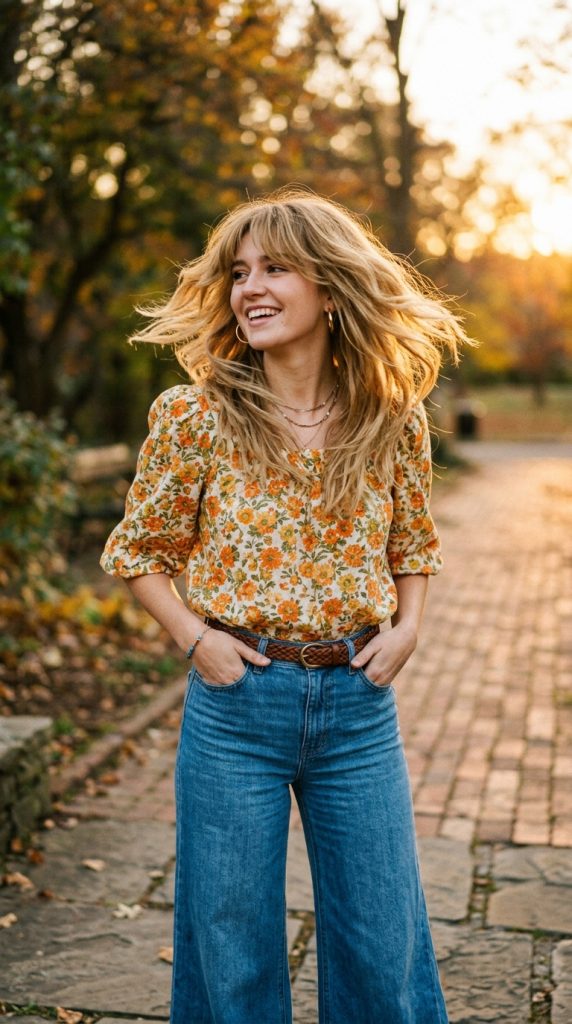
The wolf cut is the defining haircut of the current moment — a direct descendant of the 70s shag that has been updated for contemporary aesthetics. It sits somewhere between a shag and a mullet, with extremely heavy layering at the crown that creates a dramatic, almost mushroom-like volume at the top, and longer, thinner layers at the bottom. For fine hair, it’s one of the most volume-creating options available.
What Makes It Work for Fine Hair:
The wolf cut concentrates the most dramatic layering at the crown and the top of the head — precisely where fine hair most needs help. The short, heavily layered top section creates an almost architectural lift, while the longer, wispy layers at the bottom give the impression of length without the weight that would flatten fine hair.
How to Ask for It:
Ask your stylist for a wolf cut with disconnected layers — meaning the top layers are significantly shorter than the bottom, creating a visible difference in length between the crown and the ends. Request curtain bangs as part of the cut. Specify that you want the ends point-cut or razor-cut for maximum texture and that you have fine hair, so you need the layers to be dramatic rather than subtle.
How to Style It:
Apply a sea salt spray or texturizing mousse to damp hair. Flip upside down and scrunch while diffusing on low heat. Once fully dry, use a small-barrel curling wand to enhance the natural texture of the layers. Apply a dry texturizing spray specifically at the crown for extra lift. Separate any pieces that are clumping together with your fingertips.
Pro Tips:
- The wolf cut on fine hair should be styled with as little heat as possible — air drying with a texturizing product often looks better than blow-drying straight
- The crown volume is the signature of the wolf cut — use a root-lifting spray there and gently tease with a wide-tooth comb if needed
- Dark colors make the layers less visible; lighter colors, highlights, or balayage enhance the visual texture of each layer dramatically
- This cut looks significantly different on straight versus wavy fine hair — ask your stylist how they’ll adapt the technique for your specific texture
Best For: Fine straight and fine wavy hair, any length from short to medium-long.
Occasion: Everyday cool-girl style, creative environments, concerts, casual events.
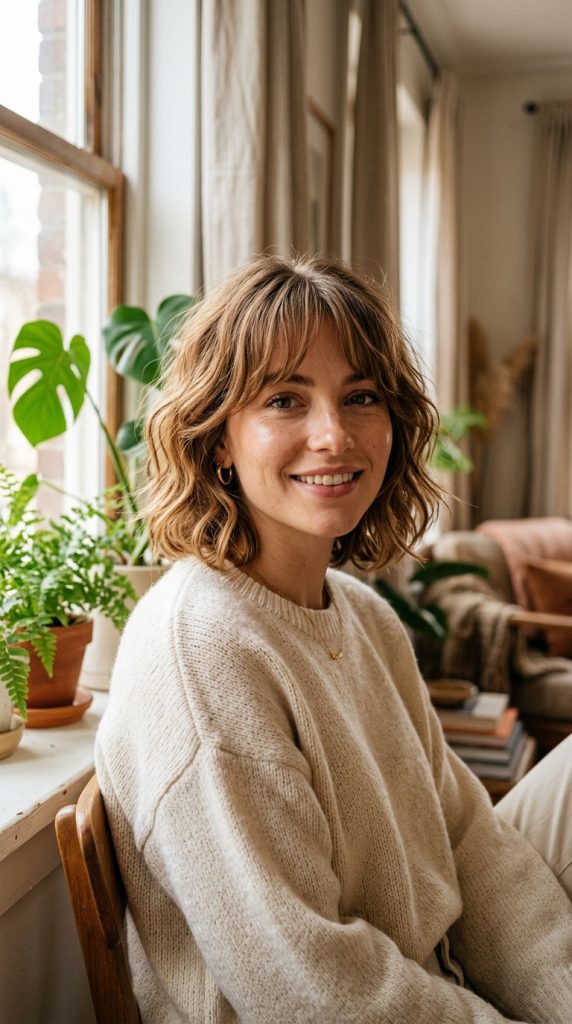
3. The Curtain Bang Shag Bob
The Vibe: Soft, romantic, face-framing, and endlessly flattering.
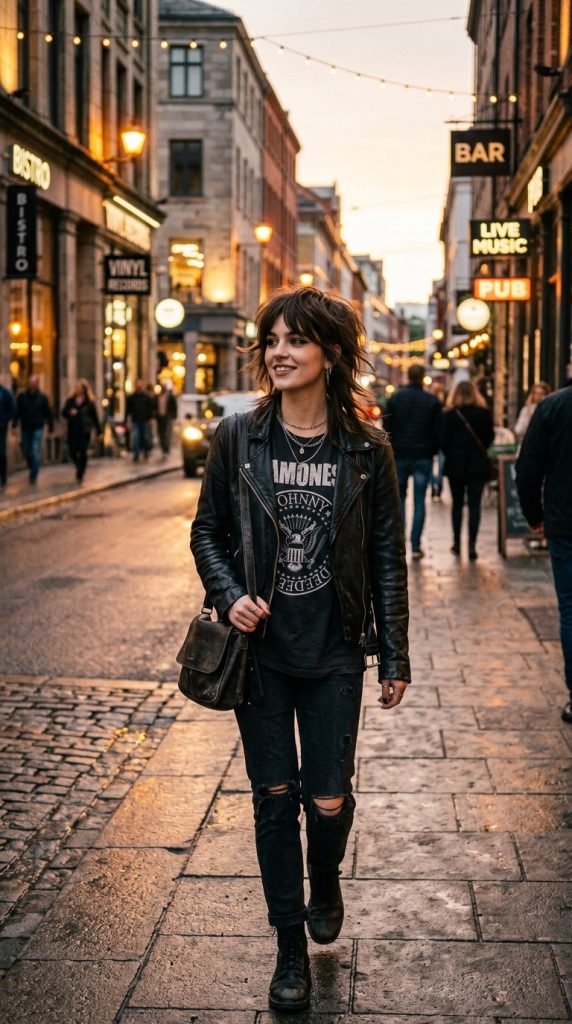
The curtain bang shag bob sits at the intersection of three enormous hair trends — the bob, the shag, and curtain bangs — and the result is a style that manages to be simultaneously trendy and timeless. For fine hair specifically, this combination is particularly powerful because each element contributes something the fine hair needs: the bob removes excessive length and weight, the shag layers add texture and movement, and the curtain bangs frame the face in a way that adds apparent thickness right at the front.
What Makes It Work for Fine Hair:
At chin to jaw length, the shag bob sits at the sweet spot for fine hair — long enough to move beautifully, short enough that the hair’s natural lightness becomes a feature rather than a flaw. The layers in the bob remove any potential heaviness at the ends. The curtain bangs — parted in the center and feathering out to each side — add a visual layer of depth right at the hairline that makes fine hair look considerably more voluminous than it is.
How to Ask for It:
Ask for a shaggy bob with lots of internal layering, choppy ends, and curtain bangs. Specify that the bangs should be feathered and face-framing rather than blunt. Ask for the ends to be point-cut to remove any heaviness. The finished length should sit between the chin and the jaw.
How to Style It:
Apply a volumizing cream or lightweight mousse to damp hair. Blow-dry the bangs first using a round brush, curving each side outward and away from the center part for the classic curtain bang shape. Blow-dry the rest of the bob using a paddle brush or round brush for movement. Once dry, use a one-inch curling iron to add soft, outward-curving bends to the ends. Finish with a light-hold spray.
Pro Tips:
- The curtain bang needs to be trimmed every three to four weeks to stay in its sweet spot — too long and it loses the framing effect, too short and it looks like a fringe
- A ceramic flat iron dragged along the ends and flicked slightly outward creates the signature shag bob shape quickly and easily
- For fine hair, less product is always more — a single pump of lightweight mousse is usually enough for a chin-length shag bob
- This style looks incredible with a lived-in color or subtle balayage that enhances the visual texture of the layers
Best For: Fine hair at chin to jaw length. Works beautifully on fine straight and fine wavy hair.
Occasion: Everyday wear, work, dates, casual and semi-formal events.
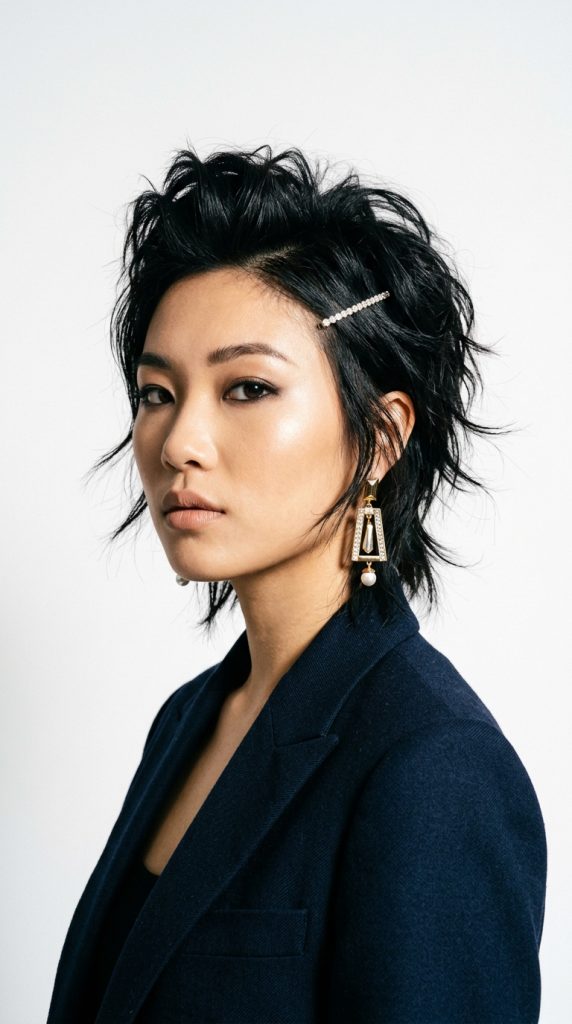
4. The Pixie Shag
The Vibe: Bold, artistic, playful, and completely fearless.
The pixie shag is for the person who wants maximum impact with minimum length. It takes the structure of a shag — the heavy layering, the textured ends, the crown volume — and applies it to a very short pixie cut, creating something that is simultaneously delicate and dramatic. For fine hair, the pixie shag is arguably the most transformative option on this list because the shortness of the cut means there is essentially no weight left to flatten the hair.
What Makes It Work for Fine Hair:
At pixie length, fine hair has no choice but to stand up and have presence. The short crown layers in a pixie shag create lift and dimension right at the top of the head. The textured, piece-y ends create the illusion of density throughout. The heavy layering means each section of hair has its own direction and life — exactly what fine, flat hair needs.
How to Ask for It:
Ask for a textured pixie with shaggy elements — longer at the top, shorter at the sides and back, with lots of point-cutting and texturizing throughout. The crown should have the most volume and the longest layers. Request soft, feathered edges rather than a blunt outline. This cut requires a stylist who is comfortable with creative, textured cutting techniques.
How to Style It:
Apply a very small amount of volumizing mousse or texture cream to damp hair. Blow-dry on low heat using a diffuser, scrunching the hair upward toward the scalp. For a sleeker look, use a small round brush to blow-dry the crown section upward and outward. Finish with a tiny amount of lightweight pomade or wax worked between the fingertips and raked through to define the layers and ends.
Pro Tips:
- With fine hair at pixie length, products should be used sparingly — a pea-sized amount is often enough for the entire head
- A pixie shag on fine hair looks beautiful with or without accessories — a single thin headband or a small crystal clip at the side elevates the style instantly
- This cut requires more frequent trims than longer styles — every four to six weeks to maintain the shape and texture
- The pixie shag is one of the few hairstyles where fine hair’s natural lightness is a genuine advantage — the hair moves, floats, and styles with ease
Best For: Fine hair at pixie to very short lengths.
Occasion: Bold everyday style, creative industries, editorial moments, fashion-forward occasions.
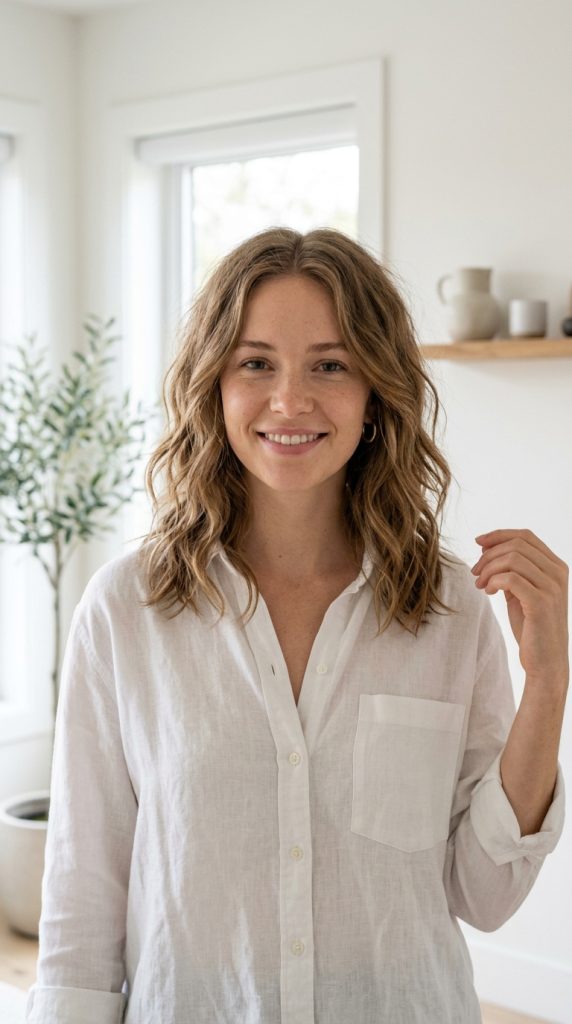
5. The Layered Lob Shag
The Vibe: Relaxed, versatile, lived-in, and universally flattering.
The layered lob shag — the long bob with shaggy layering — is the most wearable style on this list and the one most likely to work for the widest range of people with fine hair. The lob length, sitting at the collarbone or slightly above, is widely considered the single most flattering length for fine hair — long enough to have presence and movement, short enough that the hair’s lightness doesn’t become limpness.
What Makes It Work for Fine Hair:
At lob length, fine hair gets the best of both worlds. It’s long enough to style in multiple ways — half up, twisted back, loose — but short enough that layering can do real structural work. The shaggy elements — choppy ends, internal layering, textured face-framing pieces — add the visual weight and movement that fine hair lacks at any length.
How to Ask for It:
Ask for a lob with heavy internal layering, choppy ends (not blunt), and face-framing layers. Specify that you want the layers to start at the crown rather than halfway down the head — starting layers too low is a common mistake that removes bulk from the ends but doesn’t address the flat roots that are the main problem for fine hair. Ask for point-cutting throughout.
How to Style It:
Apply a volumizing mousse or root-lifting foam to damp roots. Blow-dry with a round brush, lifting the roots away from the scalp as you dry. Use a one-inch wand to add loose waves throughout. Apply a dry texturizing spray at the roots and scrunch the ends with a small amount of lightweight pomade for definition. Shake out with your fingers.
Pro Tips:
- The layered lob shag is the most forgiving style on this list as it grows out — the layers simply get longer and the style evolves naturally for weeks before needing a trim
- Ombre, balayage, or lived-in color techniques on a layered lob shag look extraordinary — the color adds visible dimension to every layer
- Try sleeping in two loose braids on freshly washed hair and undoing them the next morning — the natural wave this creates is the perfect base texture for a layered lob shag
- This style transitions beautifully from casual to polished — loose and wavy for the weekend, smoothed and tucked for work
Best For: Fine hair at collarbone to shoulder length. Works on all fine hair textures.
Occasion: Everything — the most versatile style on this list.
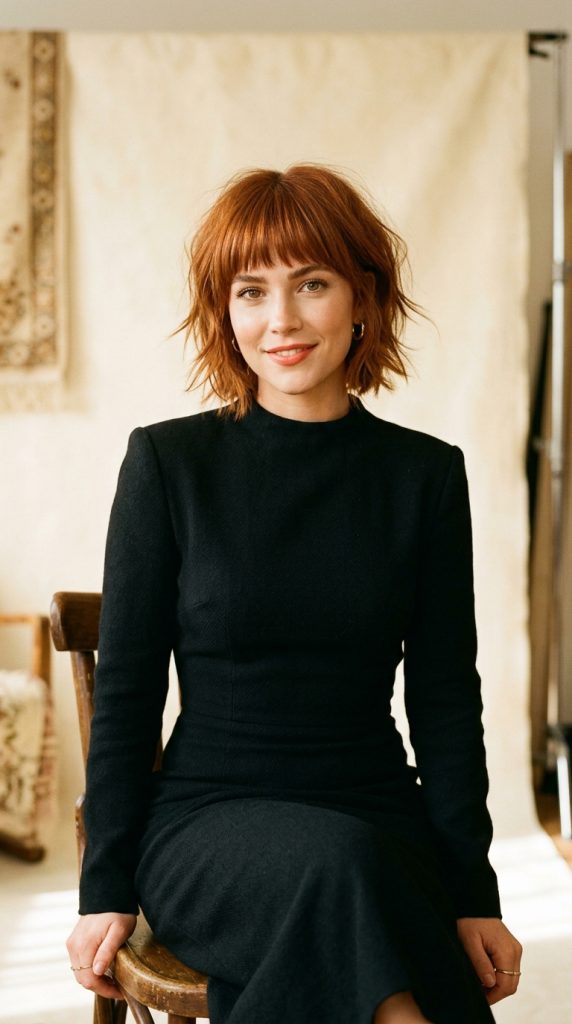
6. The Shaggy Fringe Bob
The Vibe: Retro, cool, artsy, and confidently quirky.
The shaggy fringe bob pairs a short, heavily layered bob with a full fringe — a blunt or slightly textured bang that hits just above or at the eyebrows. Where curtain bangs soften and frame, a full fringe makes a statement. For fine hair, a full fringe is actually a strategic styling choice — it adds a dense-looking front section that creates the impression of a fuller head of hair overall.
What Makes It Work for Fine Hair:
A full fringe instantly creates visual density at the very front of the hair — the area people see first. Even very fine hair, when gathered into a fringe, looks thick and intentional across the forehead. Combined with a shaggy bob below — layered, textured, choppy — the full fringe bob creates a style that appears dramatically fuller than the underlying hair density would suggest.
How to Ask for It:
Ask for a bob with a full fringe — specify whether you want a blunt bang (straight across, very retro) or a slightly textured bang (point-cut for a softer edge). The bob should be heavily layered and shaggy, with lots of internal layers and choppy ends. The overall length should sit between the chin and jaw.
How to Style It:
Style the fringe first — apply a very small amount of mousse and blow-dry straight down using a flat brush for a blunt finish, or use a round brush and curl slightly under for a classic shape. Style the rest of the bob with a round brush for volume or a texturizing spray for a more undone finish. Keep the fringe smooth while letting the rest of the bob be deliberately textured — the contrast is part of what makes this style so compelling.
Pro Tips:
- Fine hair fringes need trimming every two to three weeks — fine hair grows quickly and a too-long fringe on fine hair immediately loses its density and shape
- A fringe on fine hair should be cut slightly thicker than you think you need — fine individual strands mean you need more of them to create a dense-looking bang
- Dry shampoo applied at the roots of the fringe in the morning adds instant volume and grip that keeps the bang in shape all day
- This style is particularly beautiful on fine hair with warm tones — honey blonde, copper, and warm brunette all photograph spectacularly with a fringe bob
Best For: Fine hair at chin to jaw length.
Occasion: Creative and artistic environments, everyday bold style, editorial looks.
7. The Textured Shag with Money Piece Highlights
The Vibe: Dimensional, luminous, modern, and visually rich.
This style is as much about color as it is about cut — and for fine hair, that’s an important point. One of the most effective ways to make fine hair look thicker, more dimensional, and more textured is through strategic color placement. The money piece — chunky face-framing highlights placed on the front sections directly around the face — creates an immediate visual contrast that makes layers pop and fine hair appear considerably more full.
What Makes It Work for Fine Hair:
Color contrast creates the illusion of dimension and texture in a way that a single flat color never can. When the front sections of a shag are highlighted two to three shades lighter than the rest of the hair, every layer becomes visible, every piece-y end catches the light differently, and the overall impression is of a much fuller, more textured head of hair. The money piece concentrates this effect exactly where the eye is drawn first.
How to Ask for It:
At the salon, ask for a shag cut with heavy layering, choppy ends, and face-framing layers. Then ask your colorist for money piece highlights — chunky sections of color directly framing the face, applied two to three shades lighter than your base color. The contrast should be visible but not jarring — think warm caramel on brunette, bright blonde on medium brown, or platinum on dark blonde.
How to Style It:
Apply a heat protectant and a volumizing mousse to damp hair. Blow-dry with a round brush for movement. Use a large-barrel curling iron to add loose waves that show off the color contrast between your money piece and the rest of the hair. A shine spray applied after styling makes both the highlights and the overall style look luminous and healthy.
Pro Tips:
- Ask your colorist to place the money piece highlights starting very close to the root — highlights that begin too far from the scalp lose their visual impact on fine hair
- Toning your money piece every six to eight weeks keeps the color vibrant and prevents brassiness that would dull the contrast effect
- Purple or blue toning shampoo used once a week on highlighted fine hair maintains brightness and prevents yellowing
- This style photographs beautifully in any lighting — the color contrast and layer texture create natural dimension in every photo
Best For: Fine hair of any length with shaggy layering.
Occasion: All occasions — the color does the styling work for you.
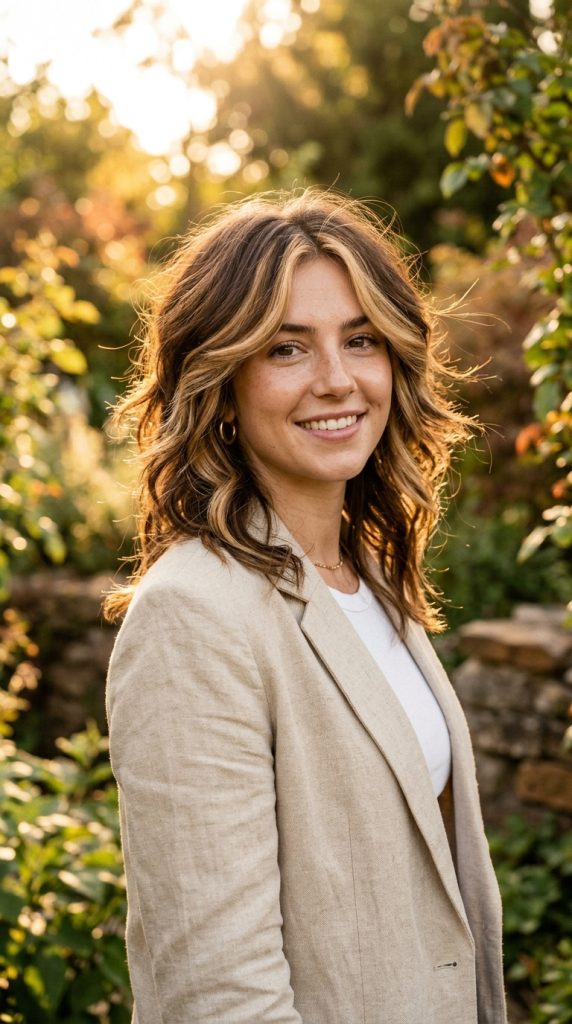
8. The Short Shag with Defined Curtain Bangs
The Vibe: Chic, sweet, precisely styled, and effortlessly put-together.
This is the most polished and deliberately styled option on this list — a short shag (sitting above or at the chin) with precisely shaped curtain bangs that are clearly defined and intentionally placed. While several styles on this list embrace the undone aesthetic, this one leans into controlled styling and clean lines, creating a look that is sophisticated and editorial.
What Makes It Work for Fine Hair:
At short shag length, every cut detail is maximally visible — the layers are more dramatic, the curtain bangs more prominent, the textured ends more defined. Fine hair at this length has almost no weight working against it, which means the layers can create real architectural lift without any competing heaviness. The curtain bangs, precisely shaped, frame the face with a density and deliberateness that makes fine hair look intentionally styled and full.
How to Ask for It:
Ask for a short shag with the length sitting at or just above the chin. Request heavily layered crown sections, choppy textured ends throughout, and well-defined curtain bangs parted at the center and feathering outward to each side. This is a precise cut that requires communication — bring reference photos to your appointment.
How to Style It:
Apply a lightweight volumizing foam to damp hair. Using a small round brush, blow-dry the curtain bangs first — starting at the center part and rolling each side outward and slightly under, then releasing upward for a soft curve. Blow-dry the rest of the shag with a slightly larger round brush, lifting the roots and curving the ends. Finish with a fine mist of flexible hairspray to hold the curtain bang shape.
Pro Tips:
- Curtain bangs on fine hair must be trimmed very regularly — they grow out of their perfect shape faster than thicker bangs because each strand is lighter and falls more quickly
- Setting the curtain bangs with a small round brush while the hair is still warm from the blow-dryer, then letting them cool completely before touching, locks in the shape dramatically
- A very small amount of pomade smoothed over the curtain bangs after styling eliminates frizz and keeps the shape without adding weight
- This style is particularly flattering on oval and round face shapes — the curtain bangs elongate and define
Best For: Fine hair at very short to chin length.
Occasion: Work, polished everyday style, semi-formal events, brunches and social occasions.
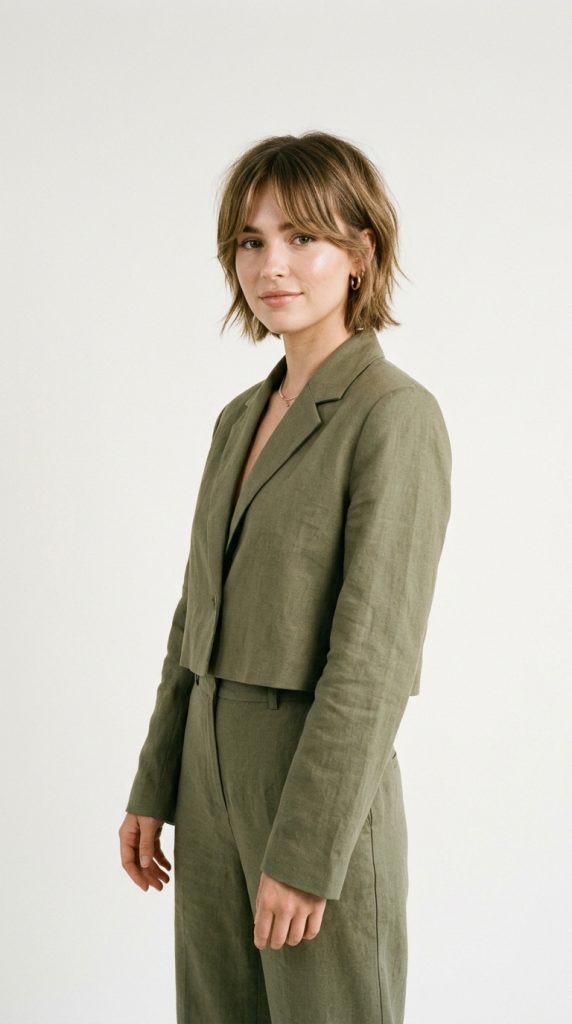
9. The Retro Shag with Flipped Ends
The Vibe: Vintage, playful, nostalgic, and deeply charming.
The retro shag with flipped ends is a direct nod to the hair styles of the 1960s and early 1970s — a medium-length shag where the ends are curled or blown outward and upward, creating a flipped, almost winged shape at the bottom. It’s the Farrah Fawcett spirit channeled through a layered, shaggy cut — and for fine hair, those flipped ends add a visual fullness and shape at the bottom of the hair that completely transforms the silhouette.
What Makes It Work for Fine Hair:
The flipped ends create shape and volume exactly where fine hair tends to look its thinnest — at the very ends. By curling or blowing the ends outward rather than allowing them to fall straight, the style creates the appearance of more hair, more body, and more deliberate structure. Combined with the layering of a shag above, the result is a style that looks significantly fuller than the actual hair density.
How to Ask for It:
Ask for a medium shag cut with heavy layering, choppy ends, and a length that sits between the chin and the collarbone. Specify that you want the cut shaped to support flipped ends — a slight undercut graduation at the perimeter can help the ends flip more naturally. Curtain bangs or a side-swept fringe work beautifully with this style.
How to Style It:
Blow-dry the hair using a large round brush, rolling the ends outward and upward as you finish each section. The brush should roll under and then outward at the very tips of the hair, flicking the ends away from the face. Use a large-barrel curling iron or hot rollers to enhance the flip if needed. Finish with a medium-hold spray to lock the shape in place.
Pro Tips:
- The flip works best on fine hair that has been blow-dried rather than air-dried — the heat sets the outward shape that the natural lightness of fine hair won’t hold on its own
- A round brush with a medium-sized barrel (around one and a half inches) creates the most classic, controlled flip
- Vintage accessories — a thin headband, a wide fabric band, or even a silk scarf tied around the head — elevate this retro shag beautifully
- This style photographs beautifully in profile — the flipped silhouette creates a very distinctive, glamorous shape from the side
Best For: Fine straight and fine wavy hair at chin to collarbone length.
Occasion: Themed events, creative daily wear, vintage-inspired fashion moments, social events.
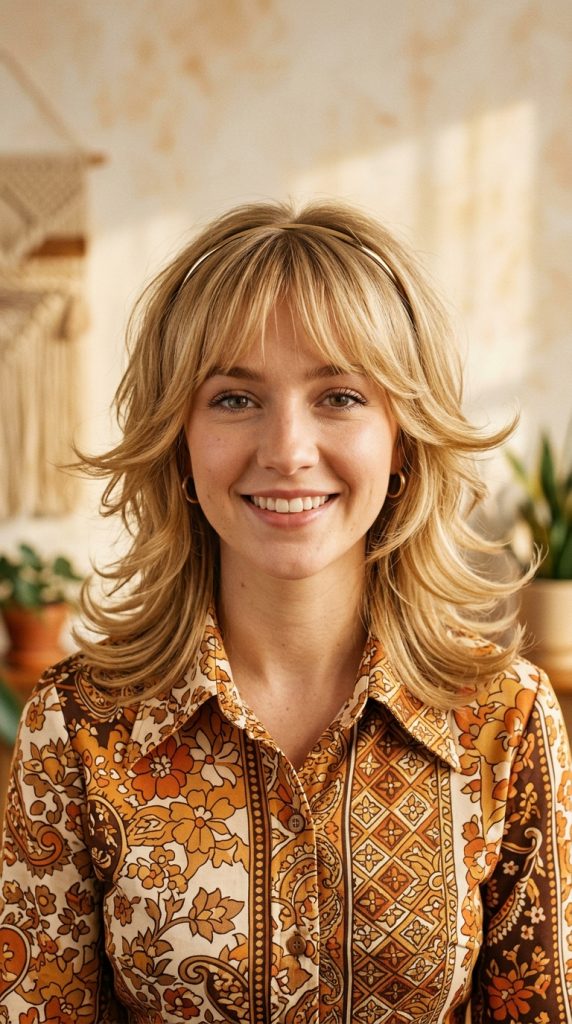
10. The Effortless Air-Dried Shag
The Vibe: Natural, low-maintenance, effortlessly beautiful, and deeply relaxed.
Not every shag needs heat tools, products, and a twenty-minute morning routine. The effortless air-dried shag is designed specifically to look its best when it’s done as little as possible. It relies on a very specific cut — one that accounts for how the hair dries naturally — and a minimal product routine that enhances rather than overrides the hair’s natural movement and texture. For fine hair, this is a revelation: a style that actually looks better when you do less.
What Makes It Work for Fine Hair:
Fine hair that is allowed to air dry with minimal product tends to dry lighter, with more natural movement and texture, than fine hair that is blow-dried or heat-styled. A shag cut that is designed for air-drying uses this to its advantage — the layers are cut in a way that creates movement when the hair dries naturally, the choppy ends add texture without any additional styling, and the whole result is a style that looks like it was made for exactly the way the hair naturally behaves.
How to Ask for It:
Tell your stylist you want a shag cut specifically designed for low-maintenance air-drying. Ask for the layers to be cut with air-drying in mind — this means the stylist will account for how your particular hair type dries naturally, rather than cutting for a blow-dried finish. Request lots of internal layering, piece-y ends, and face-framing sections.
How to Style It:
Wash your hair and gently squeeze out excess water with a microfiber towel — never rub fine hair with a regular towel, as this causes frizz and breakage. Apply a small amount of a lightweight air-dry cream or a curl-enhancing cream if you have any natural wave. Scrunch gently and leave completely alone until dry. Once fully dry, apply the smallest possible amount of a dry texturizing spray at the roots and shake out with your fingers.
Pro Tips:
- The single most important product for this style on fine hair is a lightweight air-dry cream — it adds just enough definition and frizz control without weighing fine hair down
- Flipping your head upside down while the hair air-dries creates volume at the roots that wouldn’t develop if the hair dried hanging straight down
- This style looks best on fine hair that has at least some natural wave or texture — completely straight fine hair may need a tiny amount of light mousse to give the air-dried result some shape
- Going from wet to dry in this style genuinely takes zero effort — it’s the perfect style for mornings when you simply don’t have time
Best For: Fine wavy or slightly textured hair at any length.
Occasion: Everyday wear, weekends, low-maintenance lifestyle, any occasion where natural beauty is the goal.
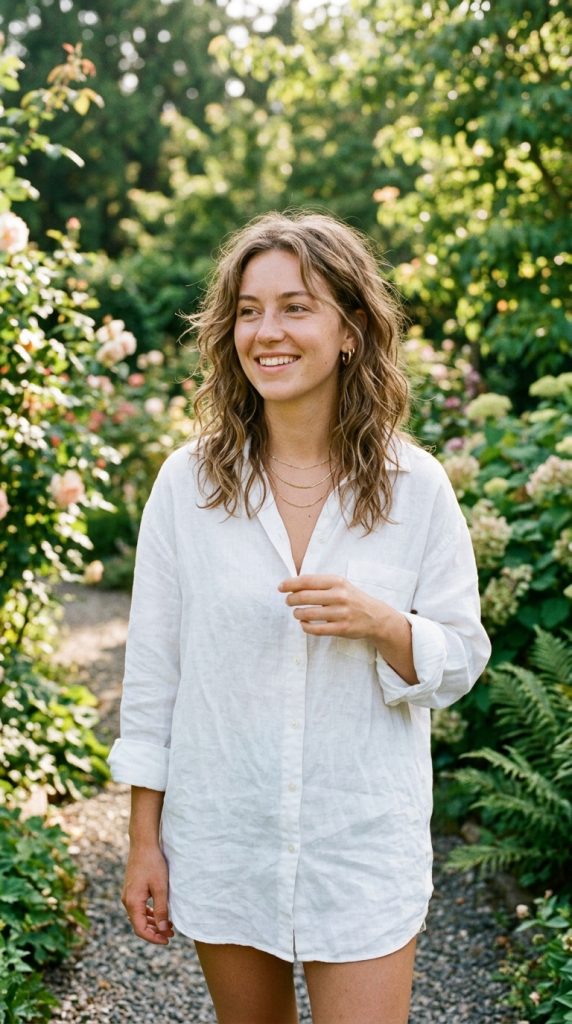
The Essential Products for Fine Hair Shag Styling
Fine hair is uniquely sensitive to products. Too much product and fine hair is weighed down, greasy, and flat. Too little and it has no hold, no texture, and no life. Here is the complete product toolkit for maintaining and styling a shag on fine hair:
Volumizing Mousse — The foundation product for fine hair styling. Apply to damp roots and work through to the ends. Look for a lightweight formula specifically designed for fine or thin hair — heavy mousses will flatten rather than lift. Apply the equivalent of a golf ball-sized amount before blow-drying any shag style.
Root-Lifting Spray or Root Boost Foam — Sprayed directly at the roots before blow-drying, this product gives fine hair the root lift it cannot create on its own. It’s different from mousse — it specifically targets the root area and provides structural support at the scalp level. It is transformative for fine hair.
Dry Texturizing Spray — Applied to the roots and mid-lengths of dry, styled hair, this product adds grip, volume, and texture between washes. It’s the secret weapon for making fine hair shag styles look full and styled on day two and three. A few quick pumps and a shake-out with the fingers can completely refresh a fine hair shag.
Lightweight Pomade or Hair Wax — Used sparingly on the very ends of dry hair to define the piece-y, textured ends that are the signature of the shag. On fine hair, use the tiniest possible amount — a grain-of-rice sized piece worked between the fingertips before raking through the ends.
Sea Salt or Texturizing Spray — Applied to damp hair before air-drying or diffusing, this adds the grip and grit that fine hair lacks naturally. It enhances any natural wave and helps the layers of a shag sit separately rather than clumping together.
Flexible-Hold Hairspray — A light-hold spray over a finished shag style protects the volume and texture without making fine hair stiff or crunchy. Look specifically for formulas that say “light hold” or “flexible hold” — heavy-hold sprays crush the volume that fine hair shag styling works so hard to create.
Volumizing Shampoo and Conditioner — The foundation starts in the shower. Use a volumizing or strengthening shampoo that adds body rather than moisture-weight. Condition only from the mid-lengths to the ends — applying conditioner to the roots of fine hair flattens it immediately.
How to Talk to Your Stylist About a Fine Hair Shag
Many people with fine hair have had the experience of leaving a salon with a shag that immediately falls flat — and the problem is almost always in the communication rather than the stylist’s skill. Here’s exactly what to say:
Say: “I have fine hair and I want a shag with heavy layering that starts at the crown, not halfway down the head.”
Say: “Please use point-cutting or razor-cutting on the ends — I don’t want any blunt lines.”
Say: “I want the layers to be dramatic and visible, not subtle — my hair is fine so I need the layering to do real work.”
Say: “My main concern is volume at the roots and texture at the ends — I want the cut to do as much of that work as possible.”
Don’t say: “Can I have some layers?” — This is too vague for a fine hair shag. You need specifics.
Always bring: Reference photos from Pinterest that show the exact style you want. Images communicate what words often can’t, especially for a cut with as many variables as the shag.
Quick Reference: 10 Shag Hairstyles for Fine Hair
| Style | Best Length | Key Feature | Skill Level | Time to Style |
|---|---|---|---|---|
| Classic 70s Shag | Medium to long | Maximum layering throughout | Beginner | 20 min |
| Modern Wolf Cut Shag | Short to medium | Disconnected crown layers | Beginner | 15 min |
| Curtain Bang Shag Bob | Chin to jaw | Face-framing curtain bangs | Beginner | 15 min |
| Pixie Shag | Very short | Crown lift, textured ends | Beginner | 10 min |
| Layered Lob Shag | Collarbone to shoulder | Versatile internal layering | Beginner | 20 min |
| Shaggy Fringe Bob | Chin to jaw | Full fringe density | Intermediate | 20 min |
| Textured Shag + Money Piece | Any length | Color contrast for dimension | Beginner | 20 min |
| Short Shag + Defined Curtain Bangs | At or above chin | Precision curtain bang styling | Intermediate | 20 min |
| Retro Shag with Flipped Ends | Chin to collarbone | Vintage flipped end silhouette | Intermediate | 25 min |
| Effortless Air-Dried Shag | Any length | Zero heat, minimal product | Beginner | 0 min (air dry) |
Frequently Asked Questions About Shag Hairstyles for Fine Hair
Is a shag haircut good for fine hair? The shag haircut is one of the best haircuts specifically for fine hair. The heavy internal layering, choppy ends, and crown layers all work structurally to add volume, movement, and texture that fine hair lacks on its own. A well-executed shag on fine hair can be completely transformative.
Will a shag make fine hair look thinner? When done correctly, a shag does the opposite — it makes fine hair look fuller and more textured. The key is ensuring the layers start at the crown rather than halfway down the head, and that the ends are point-cut or razor-cut rather than blunt. A blunt cut on fine hair looks thin; a layered, textured shag looks full of life.
What length shag is best for fine hair? The lob length — sitting at or just above the collarbone — is widely considered the most flattering length for fine hair shag styles. It’s long enough to show movement and versatility but short enough that layering can do real structural work. That said, every length on this list works — from the pixie shag to the longer classic 70s shag.
How often do shag haircuts need to be trimmed? Most shag haircuts need trimming every six to eight weeks to maintain the shape and prevent the layers from growing out into a shapeless, heavy style. Styles with curtain bangs or fringe need more frequent trims — every three to four weeks — to keep the bangs in their optimal shape.
What is the difference between a shag and a wolf cut? A wolf cut is a modern evolution of the shag. The wolf cut typically features more extreme disconnection between the crown layers and the bottom layers, creating a more dramatic volume contrast at the top. A traditional shag has a more graduated, flowing layer structure. Both work beautifully for fine hair — the wolf cut creates more dramatic root volume, while the traditional shag creates more all-over movement.
What products are absolutely essential for a fine hair shag? The three most essential products for fine hair shag styling are a volumizing mousse applied to damp roots before blow-drying, a root-lifting spray for structural support at the scalp, and a dry texturizing spray applied to dry hair for between-wash volume and grip. These three products can completely transform the way a shag looks on fine hair.
Final Thoughts
Fine hair and shag hairstyles are one of the great partnerships in all of hair styling — a combination where every element of the cut works in favor of the hair’s natural characteristics rather than fighting against them. The layering adds body. The textured ends add visual density. The crown layers add lift. The overall result is a head of hair that looks dramatically fuller, more textured, and more alive than fine hair ever gets to look in a blunt, un-layered cut.
The 10 shag hairstyles for fine hair ideas in this guide span the full range of lengths, personalities, and styling preferences — from the bold and maximalist pixie shag to the effortless air-dried version that does all its work while you sleep. There is something here for every fine-haired person, and every style on this list has the potential to be genuinely life-changing for the right person.
Talk to your stylist, bring your reference photos, invest in the right products, and get ready to see your fine hair in a completely new light.
Save this guide, pin your favorites, and share it with every fine-haired person you know who has been told their hair can’t do much. It can. It just needed the right cut.