Braids are one of the oldest, most culturally rich, and most technically diverse hairstyling traditions in human history. From ancient Africa to modern-day runways, braiding has never stopped evolving — and today, the world of braided hairstyles is more exciting, more creative, and more accessible than it has ever been. Whether you’re working with your natural hair, adding braiding hair extensions for length and volume, or somewhere in between, braids offer a level of versatility that almost no other hairstyle category can match.
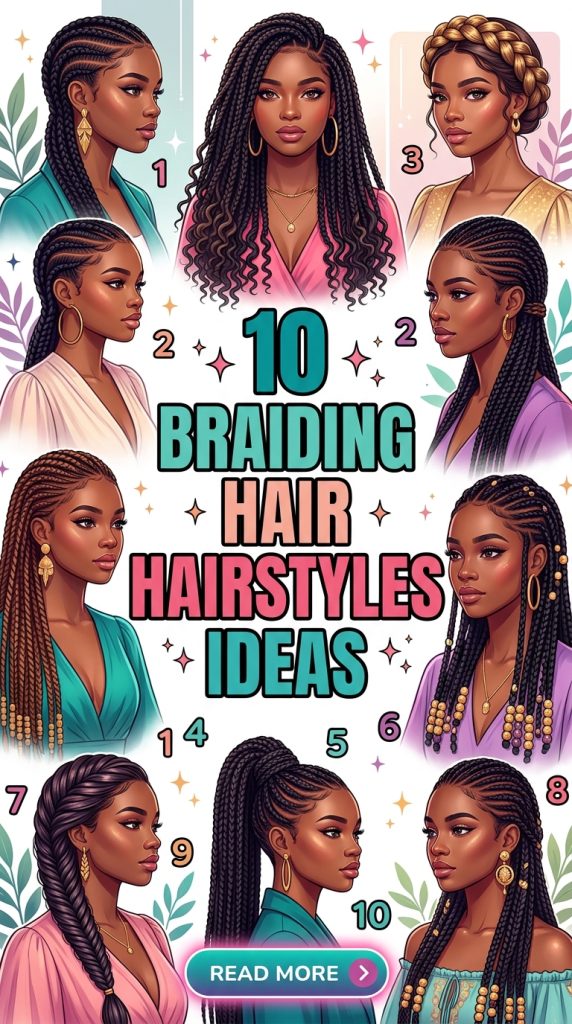
This guide is dedicated to 10 braiding hair hairstyles ideas — styles that range from classic and timeless to bold and contemporary, from beginner-friendly to show-stopping statement looks. Each style includes detailed technique breakdowns, pro tips, product recommendations, and guidance on choosing the right braiding hair for your look. At the end, you’ll find 10 detailed Pinterest image prompts for content creators and photographers.
Whether you’re looking for a protective style that lasts weeks, a weekend braid that takes thirty minutes, or an intricate pattern that belongs on a magazine cover, this guide has you covered. Let’s get into it.
The Art and History of Braiding Hair: Why It Matters
Before jumping into the styles, it’s worth acknowledging what braiding hair means culturally and historically. Braiding is not simply a styling technique — it is a tradition with deep roots in African, Indigenous, and South Asian cultures, among many others. For centuries, braiding patterns communicated social status, age, marital status, tribal affiliation, and spiritual beliefs. The act of braiding was a community ritual, a passing-down of knowledge from generation to generation, a form of connection.
Today, braided hairstyles have been embraced globally — and as they should be, because their beauty is undeniable. But wearing braids with awareness and appreciation of their cultural origins makes the experience richer and more meaningful for everyone.
Modern braiding hair — the synthetic or human hair added to natural hair for extensions — has expanded what’s possible:
- Adds length and volume for styles that your natural hair length might not support
- Creates styles that last four to eight weeks with proper care, making it one of the most efficient protective style options
- Available in hundreds of colors, textures, and weights to customize any look
- Reduces daily manipulation of natural hair, significantly reducing breakage and encouraging length retention
With that context in mind, here are the 10 best braiding hair hairstyles you need to know about.
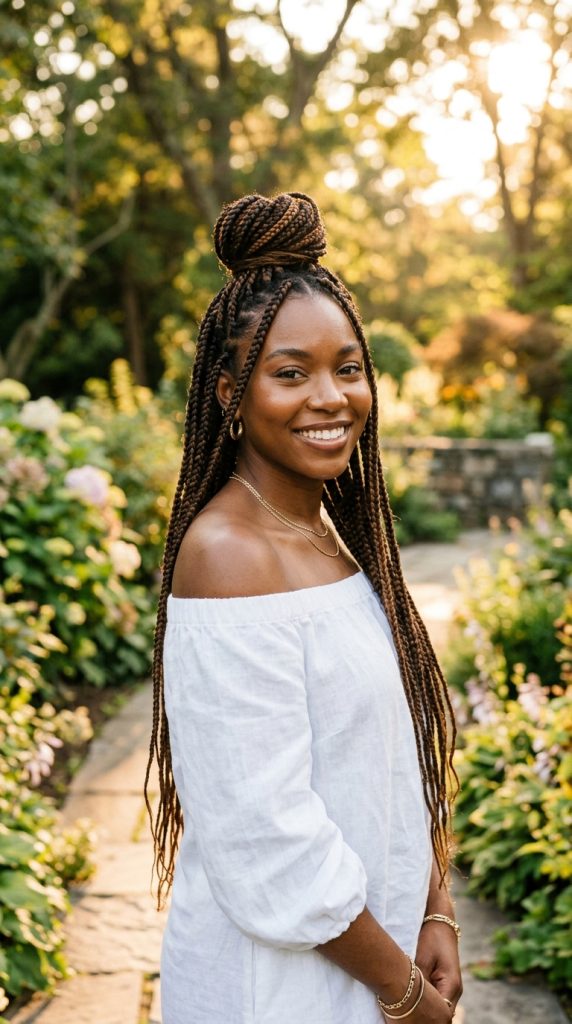
1. Box Braids
The Vibe: Iconic, powerful, versatile, and culturally significant.
Box braids are arguably the most recognized and beloved braided hairstyle in the world. Named for the box-shaped sections used to create each braid, they are a foundational protective style that has been worn proudly by Black women for generations and has been celebrated in global fashion, music, and beauty culture for decades.
What Makes Them Unique:
Each braid is created from a square or rectangular section of natural hair, into which braiding hair is added and then braided down to the desired length. The result is a series of uniform, individual braids that can be worn in countless ways — loose and flowing, gathered into a bun or ponytail, half up and half down, or styled into elaborate updos.
How to Create Them:
Section clean, detangled hair into square sections using a rat tail comb. The size of each section determines the thickness of the finished braid — smaller sections create micro box braids, medium sections create the classic size, and larger sections create jumbo box braids. Take a length of braiding hair (kanekalon or pre-stretched braiding hair work well), fold it in half, and loop it around the root of the natural hair section. Braid all three strands — two of braiding hair and one of natural hair — downward to the desired length. Seal the ends with hot water or by briefly dipping in boiling water.
Pro Tips:
- Pre-stretched braiding hair significantly reduces the time it takes to complete box braids and creates a more natural-looking finish
- Do not make your sections too small or braid too tightly at the root — tension at the scalp over time causes traction alopecia, a form of hair loss
- Moisturize your scalp weekly with a lightweight oil while wearing box braids — the scalp still needs regular care even when hair is protected
- Box braids can be installed in any length, from chin-length to floor-length — choose a length that works with your lifestyle
- Refresh your edges with edge control every few days to keep the style looking crisp and polished
Best Braiding Hair: Kanekalon pre-stretched braiding hair, X-Pression Ultra Braid.
How Long It Lasts: 6–8 weeks with proper maintenance.
Occasion: Everyday wear, work, events — truly any occasion.
2. Knotless Box Braids
The Vibe: Natural-looking, lightweight, tension-free, and modern.
Knotless box braids are the evolved, contemporary version of traditional box braids — and they have taken the natural hair community by storm in recent years. The key difference is in the installation method. Traditional box braids begin with a knot at the root where the braiding hair is attached. Knotless braids begin with the natural hair only, and braiding hair is gradually fed in as the braid progresses downward.
Why They’re Better for Hair Health:
The knotless technique distributes the weight of the braiding hair more evenly along the length of the braid rather than concentrating it at the root. This means significantly less tension and pulling at the scalp, making knotless braids the most scalp-friendly option for anyone concerned about traction or tenderness.
How to Create Them:
Section hair into clean parts as you would for traditional box braids. Start braiding with the natural hair alone for the first half-inch to inch — no extensions yet. Then begin feeding in small amounts of braiding hair gradually, adding a little more with each pass. Continue braiding to the desired length and seal the ends.
Pro Tips:
- Knotless braids take longer to install than traditional box braids because of the gradual feed-in technique — budget extra time or extra sessions
- The finished knotless braid lays flatter against the head at the root, giving a more natural, scalp-out appearance that many people prefer
- Knotless braids are the best option for anyone with a sensitive scalp, fine edges, or a history of tension-related hair loss
- The parting pattern matters — triangle parts, square parts, and curved parts all create different visual effects at the scalp
- Color placement is easier with knotless braids — ask your braider to use ombre or color-blocked braiding hair for a gradient effect
Best Braiding Hair: Pre-stretched kanekalon, Freetress Equal Bulk Braiding Hair.
How Long It Lasts: 6–8 weeks.
Occasion: All occasions; particularly popular as a long-term professional and everyday style.

3. Goddess Braids
The Vibe: Regal, dramatic, voluminous, and deeply beautiful.
Goddess braids are large, thick, sculpted braids that lie close to the scalp and flow in bold, architectural patterns. They are significantly larger than cornrows but follow the same scalp-hugging technique. The name says everything — these braids have a grandeur and elegance that commands attention.
What Makes Them Unique:
Goddess braids are typically much thicker than standard cornrows, creating a style where each individual braid is a visible, prominent feature rather than a background texture. They can be created in simple two or three-braid patterns across the head, in elaborate geometric designs, or combined with other elements like box braids or twists.
How to Create Them:
Part the hair into large sections in the desired pattern — straight back, diagonal, curved, or geometric. Apply a smoothing gel or edge control to each section before braiding to ensure a sleek, clean braid with no flyaways. Begin braiding at the scalp, picking up hair from the sides of the section as you go (similar to a French braid but flat against the scalp). Add braiding hair for fullness and length. Continue to the end of the desired length and secure.
Pro Tips:
- Goddess braids look most stunning when the scalp between sections is very clean and well-defined — use a rat tail comb and edge control to perfect each part
- Adding curly or wavy braiding hair at the ends (allowing it to hang loose rather than braiding all the way to the tip) creates a gorgeous boho goddess braid effect
- Combining three or four large goddess braids with an elaborate updo or crown arrangement at the top is a show-stopping formal style
- Refresh the edges and scalp with a light oil spray every few days to maintain the polished look
Best Braiding Hair: Jumbo kanekalon braid hair, Marley hair for textured ends.
How Long It Lasts: 4–6 weeks.
Occasion: Formal events, editorial shoots, cultural celebrations, everyday wear.

4. Fulani Braids
The Vibe: Cultural, intricate, adorned, and breathtakingly beautiful.
Fulani braids — originating from the Fula people of West Africa — are one of the most intricate and recognizable braiding traditions in existence. Characterized by a center braid running from the forehead to the back of the head, thin braids running along the sides of the face, and coiled or looped braids at the temples, Fulani braids are traditionally adorned with beads, cowrie shells, and rings.
What Makes Them Unique:
The combination of cornrowed sections, individual braids, and distinctive accessories creates a look that is architectural, deeply cultural, and visually extraordinary. Every element is intentional — the placement of beads, the direction of each braid, the framing of the face.
How to Create Them:
The center braid — the defining element — is created first, running from the center front hairline to the center nape. Additional cornrow sections are then created on each side, running in curved or diagonal patterns. Individual braids or twists are added at the crown and temples, often with curly hair allowed to hang loose at the ends. Beads and accessories are threaded onto individual braids throughout.
Pro Tips:
- Authentic Fulani braids incorporate specific accessory elements — brass rings, gold-toned beads, and cowrie shells are all traditional and look stunning
- The face-framing side braids are one of the most flattering elements — ensure they run close to the hairline for maximum impact
- Mixing braid sizes — some thin, some thick — creates a more dynamic, visually complex finished look
- This style photographs exceptionally well — the combination of patterns, accessories, and scale creates incredible visual depth
Best Braiding Hair: Thin kanekalon for cornrows, pre-stretched hair for individual braids.
How Long It Lasts: 4–6 weeks.
Occasion: Cultural celebrations, formal events, editorial photoshoots, meaningful occasions.

5. Feed-In Cornrows
The Vibe: Clean, athletic, sleek, and endlessly customizable.
Cornrows — tight, scalp-hugging braids that run in rows across the head — are one of the most ancient and foundational braiding techniques in existence. The feed-in variation uses braiding hair added gradually as you braid (rather than at the start) to create braids that start very thin at the hairline and gradually thicken as they progress — giving a natural, graduated look that is significantly more flattering and realistic than traditional cornrows with hair added all at once.
What Makes Them Unique:
Feed-in cornrows can be created in straight lines, curved patterns, geometric designs, swirling formations, or elaborate artistic patterns. The scalp between the cornrows is part of the visual design — the parting creates lines, shapes, and negative space that are as intentional as the braids themselves.
How to Create Them:
Part the hair into the desired section pattern. Start at the front hairline with the natural hair only — no extensions. Begin braiding close to the scalp, crossing strands under rather than over (the underhand technique creates the raised, three-dimensional braid that sits on top of the scalp). After the first inch, begin feeding in small amounts of braiding hair gradually with each pass. Continue braiding down to the nape and secure at the end.
Pro Tips:
- The pattern you choose for your cornrows is as important as the braiding technique itself — research the geometric styles and flowing curve designs that have been created within various African cultural traditions
- Edge control or a firm-hold braid gel applied at the roots before braiding creates the cleanest, most defined feed-in cornrows
- Cornrow designs can incorporate zigzag parts, swirling crown patterns, and asymmetric elements for a more artistic result
- Adding beads, shells, or metallic rings to the ends of individual cornrows is both beautiful and culturally significant
Best Braiding Hair: Kanekalon braiding hair in a color that matches your natural hair or in a contrasting color for bold effect.
How Long It Lasts: 4–6 weeks.
Occasion: Everyday wear, athletic activities, professional settings, all occasions.

6. Senegalese Twists
The Vibe: Silky, elegant, lightweight, and effortlessly graceful.
Senegalese twists — also called rope twists — are created using two strands of hair twisted around each other rather than braided in the traditional three-strand technique. The result is a smoother, rounder, more rope-like style than box braids, with a distinctive silky finish that many people find more flattering and lightweight.
What Makes Them Unique:
The two-strand twist technique creates a different texture and silhouette than three-strand braids — the twists are rounder, have a gentle spiral quality, and lie more softly. Senegalese twists are often made with a silkier type of braiding hair (Toyokalon or similar) that gives the finished style a beautiful sheen and movement.
How to Create Them:
Section the hair as you would for box braids. Take a section of braiding hair and fold it in half around the natural hair root. Divide into two sections. Twist each section individually in the same direction — say, clockwise. Then twist both sections around each other in the opposite direction — counterclockwise. The opposing tension locks the twist together. Continue to the desired length and seal the ends.
Pro Tips:
- Toyokalon hair or silky braiding hair creates the characteristic sheen of Senegalese twists — kanekalon gives a slightly more matte, textured finish
- Twists can be installed in the same size range as box braids — micro, medium, or jumbo — each creating a completely different visual effect
- Because they are smoother than braids, Senegalese twists flow beautifully in a loose style and create a stunning half-up arrangement
- Seal the ends with a brief dip in warm water rather than hot water — Toyokalon hair can become overly stiff with too much heat
Best Braiding Hair: Toyokalon hair, Outre X-Pression Silky Braid.
How Long It Lasts: 6–8 weeks.
Occasion: All occasions; one of the most elegant braiding hair styles available.

7. Passion Twists
The Vibe: Bohemian, romantic, textured, and wildly beautiful.
Passion twists are one of the most sought-after braiding hair hairstyles of the past several years, and their rise in popularity is completely understandable. They combine the structure of Senegalese twists with a curly, wavy braiding hair that creates individual twists with a gorgeous, bohemian, fluffy texture. The result is a style that looks like a fantasy — like natural hair and braids had a beautiful, textured child.
What Makes Them Unique:
The braiding hair used for passion twists is pre-curled or crochet-style curly hair, which gives each twist a soft, voluminous, lived-in texture from root to tip. Unlike the smooth, sleek finish of Senegalese twists, passion twists are deliberately full, airy, and romantic in their texture.
How to Create Them:
Passion twists can be installed using the crochet method or the traditional braiding method. For the crochet method, cornrow your natural hair first in a circular or back-to-front pattern. Use a crochet needle to pull looped sections of the curly braiding hair through each cornrow. Twist the looped section with a small piece of your natural hair to create each individual passion twist. For the traditional method, use the same technique as Senegalese twists but with curly rather than silky braiding hair.
Pro Tips:
- Water seals and sets passion twists beautifully — dip the finished twists in lukewarm water and let air dry for a more defined, long-lasting finish
- Passion twists are best installed at medium length — very long passion twists can become very heavy because of the volume of the curly hair
- The bohemian quality of passion twists pairs beautifully with natural, undone accessories — wooden beads, cowrie shells, and gold rings all look stunning
- Refresh passion twists by misting with a light water and conditioner mix and scrunching gently to reactivate the curl pattern
Best Braiding Hair: Freetress Water Wave hair, Spring Twist hair.
How Long It Lasts: 4–6 weeks.
Occasion: Casual wear, beach and summer events, festivals, romantic occasions.

8. Lemonade Braids
The Vibe: Bold, directional, sleek, and unapologetically commanding.
Lemonade braids took the world by storm when Beyoncé wore them in her 2016 visual album, and they have remained one of the most iconic braiding hair hairstyles ever since. They are side-swept cornrows that run horizontally across the head from one side to the other — all braids pointing in the same direction, all lying flat and clean against the scalp in a pattern that is simultaneously simple and visually arresting.
What Makes Them Unique:
The defining characteristic is the direction — all braids sweep from one side to the other, creating a strong horizontal line across the head that is both architectural and deeply flattering. The braids gather at one side and can flow loose or be gathered into a side ponytail or bun.
How to Create Them:
Part the hair from front to back on one side — either the left or right. Begin cornrowing from the parted side, picking up hair and braiding horizontally across the head toward the opposite side. Add braiding hair for length using the feed-in technique. Each row runs parallel to the one above it, creating the characteristic stacked horizontal pattern. Continue from the top of the head downward, completing each row before starting the next. Gather all finished braids at the opposite side and secure or let hang loose.
Pro Tips:
- The cleaner and more parallel the horizontal rows, the more stunning the final result — take time with each part line
- Lemonade braids look most dramatic in longer lengths — the braids sweeping to one side and flowing long create the most impact
- Adding ombre or highlighted braiding hair creates incredible visual depth in the horizontal pattern
- Edge control on the hairline before installing gives the signature sleek, laid finish that defines this style
Best Braiding Hair: Pre-stretched kanekalon in the desired color or ombre combination.
How Long It Lasts: 4–6 weeks.
Occasion: Bold everyday wear, events, photoshoots, statement occasions.

9. Tribal Braids
The Vibe: Artistic, intricate, deeply cultural, and visually extraordinary.
Tribal braids are a broad category of braiding hairstyles that draw from the braiding traditions and patterns of specific African ethnic and tribal communities. They are characterized by their complexity, intentionality, and the deeply meaningful cultural patterns they incorporate. Tribal braids are not a single style but rather a family of styles united by their connection to specific cultural braiding traditions and their use of intricate geometric patterns, accessories, and adornments.
What Makes Them Unique:
The patterns in tribal braids are not arbitrary — they carry meaning, history, and identity. The specific configurations of cornrows, the placement of beads, the use of cowrie shells, thread wrapping, and other adornments all communicate something about the wearer’s community, identity, and aesthetic values.
How to Create Them:
Tribal braids typically combine multiple techniques — cornrows, individual braids or twists, and decorative elements — in a single style. The process begins with designing the pattern, which is as important as the execution. Standard elements include a cornrowed base in a geometric or flowing pattern, individual braids or twists added at specific points, and accessories threaded throughout. The specific pattern depends on the tribal tradition being honored and the creative vision of the braider.
Pro Tips:
- Work with a braider who specializes in natural hair and has knowledge of and respect for the cultural origins of the specific tribal style you’re creating
- Accessories are integral, not optional — beads, shells, thread wrapping, and metallic ornaments transform tribal braids from a hairstyle into an artwork
- Because tribal braids often involve multiple techniques and many hours of installation, they are a significant investment — treat them as the art form they are
- Photograph tribal braids in natural light to capture the full complexity and beauty of the pattern
Best Braiding Hair: Multiple types depending on the specific style — thin kanekalon for cornrow sections, thicker hair for individual braids.
How Long It Lasts: 4–8 weeks depending on the specific techniques used.
Occasion: Cultural celebrations, formal events, important occasions, artistic expression.

10. Butterfly Braids
The Vibe: Creative, three-dimensional, fashion-forward, and absolutely jaw-dropping.
Butterfly braids are one of the most visually inventive braiding hairstyles to emerge in recent years. They are created by leaving intentional loops or puffs of hair extending outward from a standard braid or cornrow, creating a series of wing-like shapes along the length of the braid that genuinely resemble butterfly wings. The result is a style that looks like wearable sculpture — completely unlike any traditional braid.
What Makes Them Unique:
The looping technique is the signature element — instead of pulling every strand tight and flat, specific loops of braiding hair or natural hair are left extending outward, creating a three-dimensional, sculptural quality. The loops can be small and subtle or large and dramatic depending on the desired effect.
How to Create Them:
Begin with a standard box braid or cornrow installation. As you braid, intentionally leave small loops of braiding hair extending outward at regular intervals rather than pulling them tight. These loops should be uniform in size and spacing for the most aesthetically pleasing effect. Alternatively, install standard braids first and then create the butterfly effect by carefully loosening specific sections of each braid to form the loops.
Pro Tips:
- Practice the looping technique on a small section before committing to a full head of butterfly braids — consistency in loop size is what makes the style look intentional rather than messy
- Using two colors of braiding hair — one for the main braid and one for the loops — creates a stunning two-toned butterfly effect
- Butterfly braids photograph exceptionally well — the three-dimensional quality creates beautiful shadows and depth in photos
- Because the loops extend outward, butterfly braids add significant volume — this is a very full, statement-making style
Best Braiding Hair: Kanekalon pre-stretched braiding hair, rubber or silicone bands to hold loops during styling.
How Long It Lasts: 3–4 weeks (the loops can loosen more quickly than standard braids).
Occasion: Fashion events, editorial photoshoots, bold personal expression, statement occasions.

Choosing the Right Braiding Hair: A Complete Guide
Selecting the right braiding hair is as important as choosing the right style. The wrong hair can make installation difficult, cause scalp tension, or create a finish that looks artificial. Here’s what you need to know:
Types of Braiding Hair:
Kanekalon Braiding Hair — The most common and versatile synthetic braiding hair. Lightweight, heat-resistant (can be sealed with hot water), available in hundreds of colors, and works well for box braids, cornrows, feed-in styles, and lemonade braids. The go-to choice for most protective styles.
Pre-Stretched Braiding Hair — Kanekalon that has been pre-stretched to remove the natural springiness, making it easier to work with, reducing installation time, and creating a more natural-looking finish. Highly recommended for beginners.
Toyokalon / Silky Braiding Hair — A smoother, silkier synthetic fiber that creates a glossy, sheen-rich finish. Best for Senegalese twists and styles where a polished, silky appearance is desired.
Spring Twist / Water Wave Hair — Pre-curled synthetic hair used for passion twists, spring twists, and bohemian styles. Creates the fluffy, textured quality that defines these romantic styles.
Marley Hair — A coarser, more textured synthetic hair that mimics the look and feel of natural Afro-textured hair. Used for Marley twists, faux locs, and natural-looking styles.
Human Hair Braiding Extensions — More expensive but the most natural-looking option. Can be colored, heat-styled, and treated similarly to natural hair. Best for premium, long-lasting protective styles.
Key Shopping Considerations:
- Match the braiding hair weight to your desired style — lighter hair for defined braids, heavier hair for voluminous styles
- Consider color carefully — ombre, highlighted, and color-blocked braiding hair creates dynamic visual effects
- Buy more than you think you need — running out mid-installation is frustrating and can result in uneven styles
Scalp Care While Wearing Braiding Hair Styles
The biggest mistake people make with braiding hair styles is neglecting scalp care during the weeks they’re installed. Braiding hair creates a physical barrier between your scalp and the outside world — but that doesn’t mean your scalp stops producing oil, experiencing dryness, or needing moisture.
Essential Scalp Care for Braided Styles:
Moisturize Weekly — Use a lightweight scalp oil or oil spray directly on the scalp between braids at least once a week. Jojoba oil, tea tree oil mixed with a carrier oil, or a dedicated scalp serum all work beautifully.
Cleanse the Scalp — You can and should wash your scalp while wearing braiding hair styles. Use a diluted shampoo applied directly to the scalp with a spray bottle or applicator, massage gently, and rinse thoroughly. Follow with a light conditioner on the natural hair beneath the braids.
Protect Your Edges — The hairline is the most vulnerable area when wearing braiding hair styles. Never let braids pull tightly on your edges. Sleep with a silk or satin bonnet every night to protect the hairline and prevent friction.
Keep the Style Fresh — Every two to three weeks, refresh the edges with edge control, address any braids that have significantly loosened at the root, and moisturize the scalp. This extends the life of the style and keeps it looking its best.
Know When to Take Them Down — No braiding hair style should be worn past its recommended timeframe. Keeping braids in too long leads to matting of the natural hair beneath, difficulty detangling, and potential breakage. Follow the recommended wear times for each style.
Hairstyle Quick Reference Chart
| Style | Technique | Installation Time | Lasts | Skill Level | Best For |
|---|---|---|---|---|---|
| Box Braids | Three-strand with added hair | 4–8 hours | 6–8 weeks | Intermediate | All natural hair types |
| Knotless Box Braids | Feed-in three-strand | 6–10 hours | 6–8 weeks | Advanced | Sensitive scalps |
| Goddess Braids | Large cornrow with extensions | 2–4 hours | 4–6 weeks | Intermediate | All natural hair types |
| Fulani Braids | Mixed cornrow and individual | 4–6 hours | 4–6 weeks | Advanced | Cultural celebrations |
| Feed-In Cornrows | Underhand scalp braid | 2–4 hours | 4–6 weeks | Intermediate | Athletic lifestyles |
| Senegalese Twists | Two-strand rope twist | 4–8 hours | 6–8 weeks | Intermediate | All natural hair types |
| Passion Twists | Two-strand with curly hair | 4–6 hours | 4–6 weeks | Intermediate | Bohemian aesthetic |
| Lemonade Braids | Horizontal feed-in cornrows | 3–5 hours | 4–6 weeks | Advanced | Bold statements |
| Tribal Braids | Mixed techniques | 6–12 hours | 4–8 weeks | Expert | Cultural expression |
| Butterfly Braids | Looped box braid technique | 6–10 hours | 3–4 weeks | Advanced | Fashion statements |
Frequently Asked Questions About Braiding Hair Hairstyles
What is the best braiding hair for beginners? Pre-stretched kanekalon braiding hair is the best option for beginners. It’s easier to work with than regular kanekalon because it’s already been stretched to remove the natural springiness. It’s lightweight, comes in many colors, and creates a natural-looking finish on box braids, cornrows, and most basic protective styles.
How long do braiding hair hairstyles last? Most braiding hair styles last between four and eight weeks, depending on the technique, the quality of the installation, and how well you maintain the scalp and edges during wear. Box braids and Senegalese twists typically last the longest — up to eight weeks. Butterfly braids and passion twists usually last three to six weeks.
Are braiding hair styles damaging to natural hair? When installed correctly and maintained properly, braiding hair styles are actually protective — they reduce daily manipulation, protect the ends, and allow natural hair to grow undisturbed. Damage occurs when braids are installed too tightly (causing traction alopecia), left in too long (causing matting), or removed carelessly (causing mechanical breakage).
How do I remove braiding hair without damaging my natural hair? Use sharp hair cutting scissors to cut each braid at the point where the braiding hair was attached — usually two to three inches from the root. Never pull braids out from the root. Once the braiding hair is removed, saturate the natural hair with a generous amount of conditioner or detangling spray before attempting to detangle, working from the ends upward.
Can you wash your hair while wearing braiding hair styles? Yes — and you should. Dilute a sulfate-free shampoo with water in a spray bottle and apply directly to the scalp between braids. Massage gently with your fingertips. Rinse thoroughly and allow to air dry completely before sleeping. You can also use dry shampoo at the scalp between washes for a quick refresh.
What braiding hair style is best for hair growth? Knotless box braids, Senegalese twists, and feed-in cornrows are all excellent styles for encouraging length retention. They install with low to moderate tension, protect the natural hair underneath, and can be maintained for weeks at a time — allowing hair to grow undisturbed. Pair any protective style with regular scalp moisturizing and a consistent nighttime bonnet routine for the best results.
Final Thoughts
Braiding hair hairstyles represent one of the most beautiful, diverse, and historically significant categories in the entire world of hair styling. From the clean architectural lines of lemonade braids to the regal fullness of goddess braids, from the cultural depth of Fulani braids to the sculptural innovation of butterfly braids — every style in this guide tells a story, creates beauty, and offers something genuinely unique.
The 10 braiding hair hairstyles ideas covered in this guide are just the beginning. The world of braiding is vast, ever-evolving, and endlessly creative. Whether you’re exploring protective styles for the first time, returning to braids after a long break, or looking for your next signature look, there has never been a better time to embrace the art of braiding.
Find a skilled braider who understands and respects the cultural and technical dimensions of these styles, invest in quality braiding hair, take care of your scalp during wear, and enjoy one of the most beautiful styling traditions the world has ever produced.
Save this guide, share it with your community, and pin your favorite styles for your next appointment.
