10. Ring-Flip Wall Calendar on a Dowel
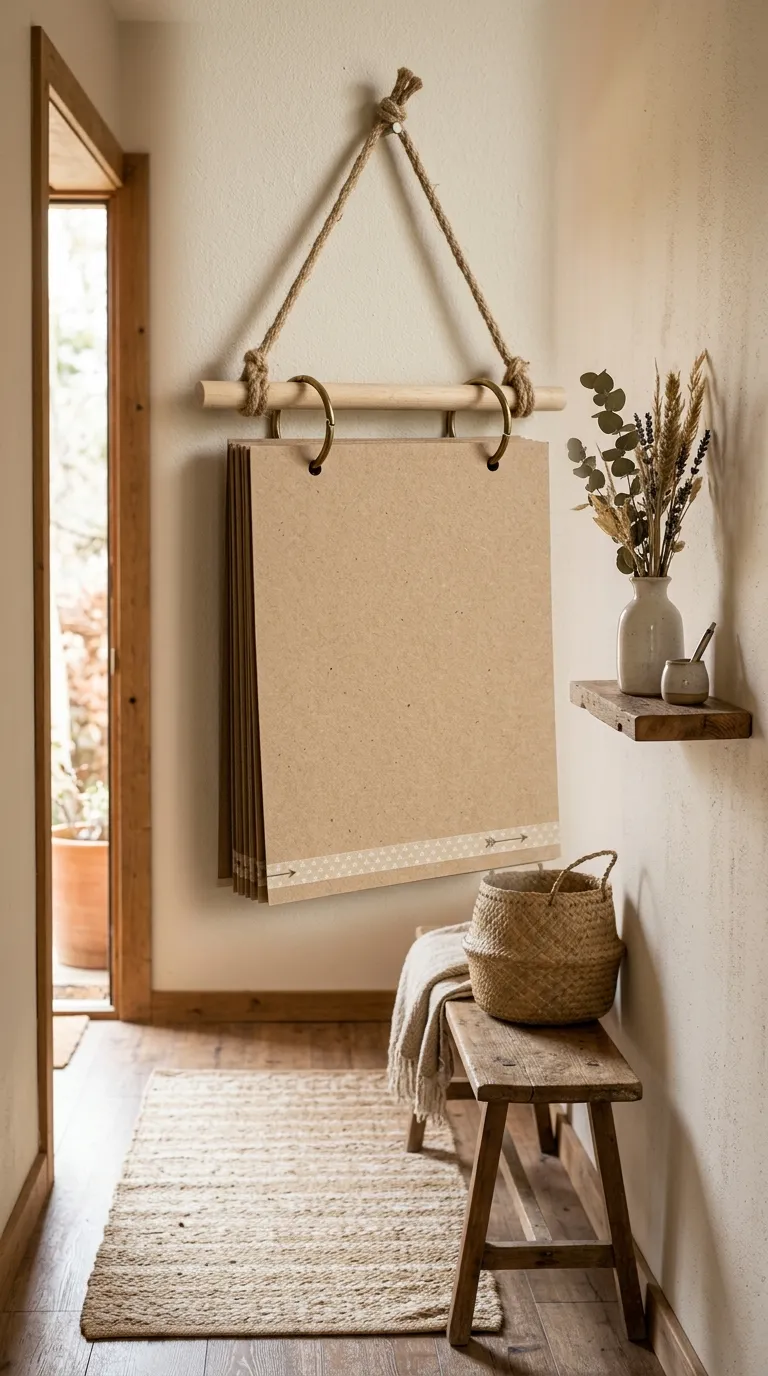
This is the most decorative option on the list, and it works well in small spaces because it’s narrow and vertical rather than wide.
Materials: A wooden dowel (about an inch thick), two lengths of twine or leather cord, metal binder rings, cardstock or heavy kraft paper, a hole punch, and a printer or letter stamps for the month names.
How to make it: Cut twelve cards to the same size and punch two holes at the top of each. Print or stamp a month name and a simple date grid on each card. Thread the binder rings through the holes and over the dowel. Tie twine to each end of the dowel to create a hanger.
Time and difficulty: Forty-five minutes. No power tools required.
Customization: Use textured paper, add a strip of washi tape along the bottom of each card, or leave the reverse side blank for notes. Because you flip rather than tear, you can reuse the same set year after year.
Where to hang it: Beside a desk, at the end of a kitchen counter, or in a narrow entryway where a wide board wouldn’t fit.
Frequently Asked Questions About DIY Wall Calendars
What’s the best material for a reusable wall calendar?
It depends on how you plan to use it. Whiteboard and acrylic surfaces work best if you’ll rewrite things often and want a clean erase every time. A magnetic steel board is the most flexible because you can move items around without rewriting. Chalkboard is the most forgiving visually but requires more maintenance.
How do I hang a heavy DIY calendar without damaging my walls?
Use the right hardware for the weight. A framed melamine or steel board should go into studs when possible; otherwise use toggle bolts or heavy-duty anchors rated well above the board’s weight. Adhesive strips are fine for lightweight prints and felt boards, but not for anything with a frame and a rigid panel.
What size should a wall calendar be for a family?
For a busy household, aim for at least 24×36 inches, and go larger if you have the wall space. The grid boxes should be big enough to hold two or three lines of handwriting. A calendar that’s too small forces everyone into abbreviations, and then nobody can read it.
Can I make a wall calendar without power tools?
Yes. The printable year-at-a-glance, the felt pocket calendar, and the ring-flip dowel calendar all require nothing more than scissors, glue, and a hole punch. Adhesive chalkboard paper and pre-cut acrylic sheets also skip the saw entirely.
How do I keep dry-erase markers from smearing?
Use fine-tip markers rather than broad ones, let the ink sit for a few seconds before touching it, and clean the board weekly with a damp microfiber cloth. If ghosting appears, a small amount of rubbing alcohol restores the surface. Never use abrasive sponges on acrylic.
How can I organize a wall calendar for multiple people?
Assign a color to each person and stick to it everywhere — markers, dot stickers, washi tape, and highlighters. Some families also divide the board into zones: a monthly grid in the center, a meal plan strip on one side, and a running to-do list on the other.
How often should I reset a reusable wall calendar?
Erase and rewrite at the start of each month, and do a quick five-minute review every Sunday. That weekly check catches schedule conflicts before they become problems, which is the whole point of putting the calendar on the wall in the first place.
Home organization doesn’t require an elaborate system or a matching set of bins. Often it just needs one surface, in a spot everyone walks past, that tells the truth about what’s coming. Any of the ten projects above can be that surface — and because you made it, you can adjust the size, the colors, and the layout until it fits your household instead of the other way around.
Start with the one that matches your space and your tools. If you have a free afternoon, the pallet wood planner or the magnetic board will reward the effort. If you have twenty minutes and a printer, the year-at-a-glance poster delivers immediately. Then personalize it — add a meal plan column, a habit tracker row, or a pocket for each child’s papers — and let it evolve as your family’s rhythm changes. The best wall calendar isn’t the prettiest one on Pinterest; it’s the one you actually look at every morning.